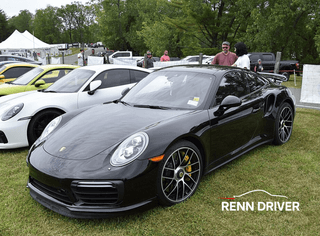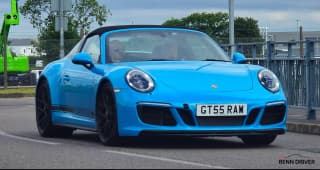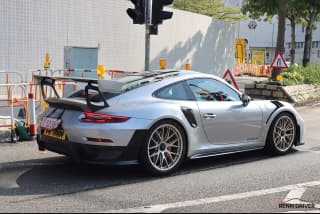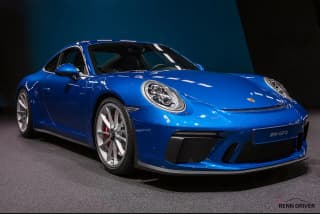
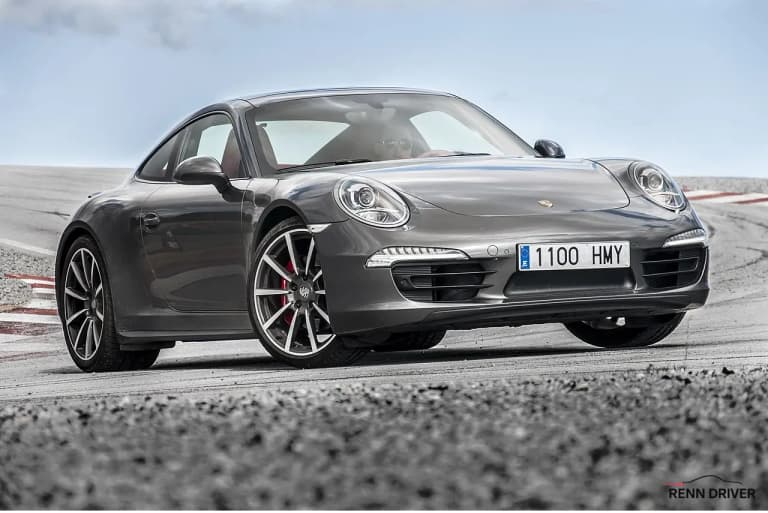
The Porsche 991 is the seventh generation Porsche 911, sold in the US from 2012 to 2019 model years. The 991.1 Carrera uses naturally aspirated flat six engines; the 991.2 Carrera switches to a 3.0 liter twin turbo flat six. Porsche built 233,540 cars across the full generation, from Carrera to GT2 RS. Choose the engine character first, then drivetrain and transmission, and commission a Porsche-specialist pre-purchase inspection before you buy.
In this article, we’ll explain the Porsche 991, the seventh-generation 911 built from 2011 to 2019. We’ll cover the engine change, Carrera trims, GT models, and used-car checks.
Contents
- 1 Quick Summary
- 2 What the 991 Is
- 3 Porsche 991.1 (2012 to 2016)
- 4 Porsche 991.2 (2017 to 2019)
- 5 Carrera, Carrera S, GTS, T, and Carrera 4
- 6 Targa 4 and Targa 4S
- 7 911 Turbo and Turbo S
- 8 The GT Cars: GT3, GT3 RS, GT2 RS
- 9 Special Editions
- 10 Engines, Transmissions, and Chassis
- 11 991 Specs
- 12 Buying a Used 991
- 13 Frequently Asked Questions
Quick Summary
- The 991 is the last 911 generation with a real naturally aspirated-versus-turbo choice in the Carrera range. The 991.1 (2012-2016) is naturally aspirated; the 991.2 (2017-2019) is turbocharged.
- Pick engine character first. The 991.1 revs higher and responds more directly; the 991.2 has more low-end torque and a newer cabin.
- The Carrera S adds power and larger brakes, while the Carrera GTS bundles more performance equipment as standard.
- Track-focused buyers should look at the GT3, GT3 RS, and GT2 RS sibling guides rather than treat this page as their spec sheet.
- Before buying any 991, run the VIN through NHTSA's recall lookup and get a Porsche-specialist pre-purchase inspection.
What the 991 Is
The 991 was the first 911 to arrive on a genuinely new platform since the 996 of 1997. Porsche stretched the wheelbase by ten centimeters and widened the track. The mixed aluminum-and-steel body was stiffer, and Porsche reports an 80 kg reduction in body weight compared with the 997 body.
Two other changes shaped the generation. Electric power steering replaced the hydraulic rack, and the 991 introduced a seven speed manual gearbox alongside a redesigned seven speed PDK.
The dating convention, because it confuses people
Porsche dates this generation 2011 to 2019 by build. Sales began in late 2011. The last car, a 911 Speedster, came off the line on 20 December 2019. US cars are titled as 2012 through 2019 model years. Both conventions are correct because they count different things.
For buying purposes, this guide groups the naturally aspirated 991.1 Carrera as 2012 to 2016 US model years. The turbocharged 991.2 Carrera covers 2017 to 2019 US model years, which is when the Carrera range switched to turbo power in the US market. Other lines, like Turbo and the GT cars, can carry their own phase-in dates. Confirm a specific car's build details rather than assuming from the model year alone.
Production numbers
Porsche built 233,540 examples of the 991, making it the most-produced 911 generation. The one-millionth 911, a Carrera S, rolled out of Zuffenhausen on 11 May 2017 during this generation's run.
Porsche 991.1 (2012 to 2016)
The 991.1 is the naturally aspirated half of the Carrera generation. Porsche's 2012 technical sheet lists 350 hp for the 3.4 liter Carrera and 400 hp for the 3.8 liter Carrera S. Both used direct fuel injection and VarioCam Plus.
Direct fuel injection was not new to the standard Carrera on the 991. Porsche introduced it on the 997 at the 2008 model update, along with PDK. The 991.1 continued DFI rather than introducing it. What was new to the standard Carrera here was the platform, the wheelbase, the electric steering, and the seven speed manual.
These engines are not Mezger units. They are part of Porsche's modern water-cooled engine line. The 991.1 evolved the 997 shape with slimmer headlights, a more steeply raked greenhouse, LED daytime running lights, and an adaptive rear spoiler.
Porsche 991.2 (2017 to 2019)
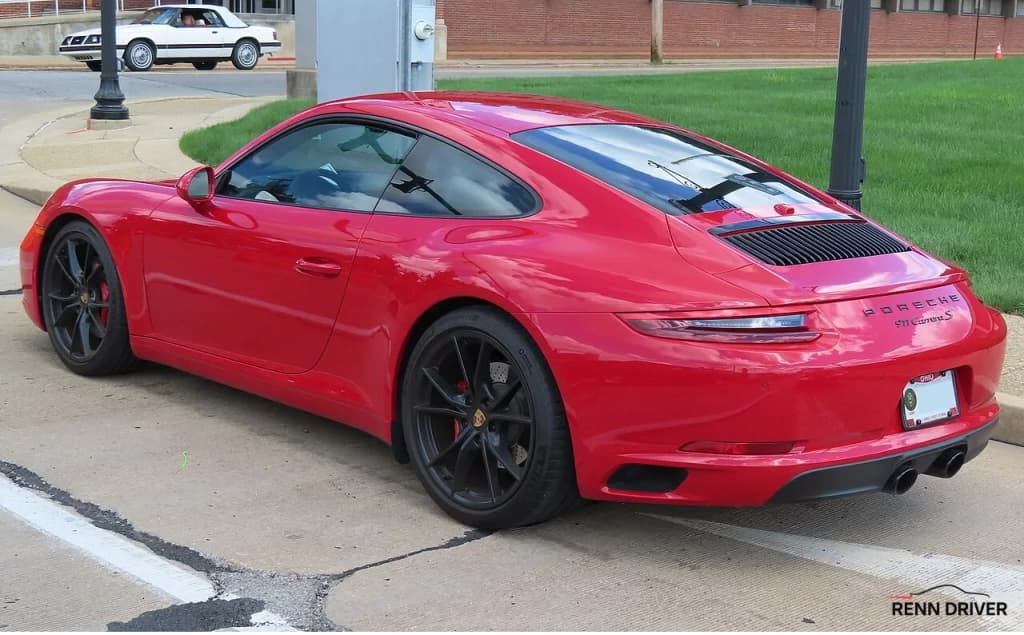
The mid-life update replaced the Carrera's 3.4 and 3.8 liter naturally aspirated engines with a 3.0 liter twin turbo flat six. Porsche's 2017 technical sheet lists 370 hp for the Carrera and 420 hp for the Carrera S.
The 991.2 delivers peak torque lower in the rev range than the 991.1. That gives it stronger low-rpm response, while the naturally aspirated 991.1 delivers power differently as revs rise.
Outside, the 991.2 got reshaped rear bodywork with vertical intakes in the bumper and a four-point brake light signature. New LED headlights with four-point daytime running lights and larger front intakes completed the update.
Carrera, Carrera S, GTS, T, and Carrera 4
The Carrera family is the backbone of the generation and where almost every used buyer ends up. Rather than walk through each trim twice, here is what separates them.
Carrera and Carrera S. The S adds power, 20 inch wheels, and larger brakes. Porsche lists 350 versus 400 hp for 2012 and 370 versus 420 hp for 2017. Confirm equipment against the exact model year and market.
Carrera GTS. Porsche's 991.1 GTS release lists 430 hp, Sport Chrono, sport exhaust, PASM, center-lock wheels, and the wide body. The 991.2 GTS release lists 450 hp, PASM and Sport Chrono as standard, the wide body on every version, and PASM Sport suspension on the Coupes. Both phases included rear- and all-wheel-drive versions. Our Porsche GTS guide explains how the badge fits across the wider range.
Carrera T. Porsche revived the 1968 911T name for a lightened, rear-drive 991.2 using the base 370 hp engine and a seven speed manual. It came with a mechanical rear differential lock, PASM Sport, reduced sound insulation, lightweight rear glass, and no rear seats as standard. Our Carrera T guide covers the full specification.
Carrera 4 and 4S. These use the same engines as their rear-drive equivalents, plus Porsche Traction Management, the wide body, and a full-width rear light bar. The electronically controlled all-wheel-drive system varies torque distribution as conditions change.
Cabriolets. Carrera Cabriolets use a power fabric roof and were offered with rear- or all-wheel drive, depending on the trim. Check roof operation, seals, drains, and cabin moisture during a pre-purchase inspection.
Targa 4 and Targa 4S
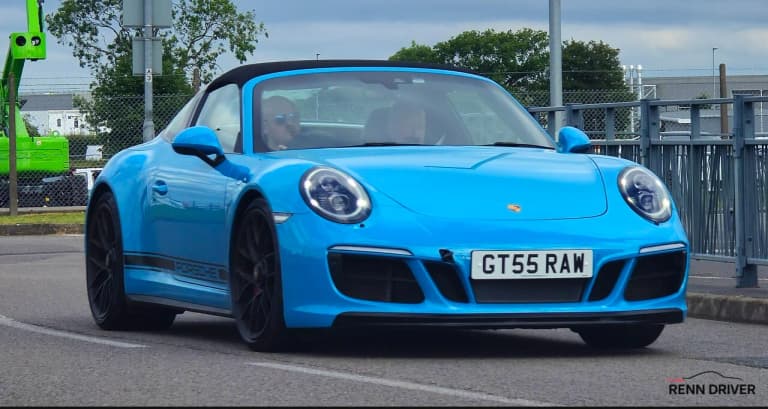
The 991 Targa brought back the wraparound Targa bar that had been gone since the 993. It replaced the 997's sliding glass roof with a fully automatic mechanism that lifts the rear screen and stows the roof panel behind the seats. The brushed aluminum hoop is fixed and structural.
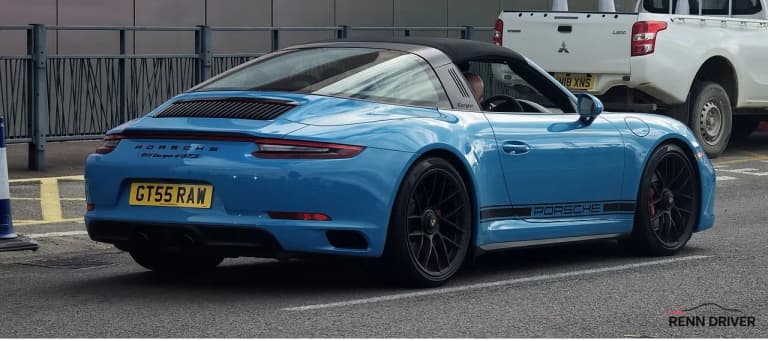
All 991 Targas are all-wheel drive. The Targa 4 shares its powertrain with the Carrera 4, while the Targa 4S matches the Carrera 4S. A Targa 4 GTS sits above both. Our 991 Targa guide owns the roof-mechanism and inspection detail.
911 Turbo and Turbo S
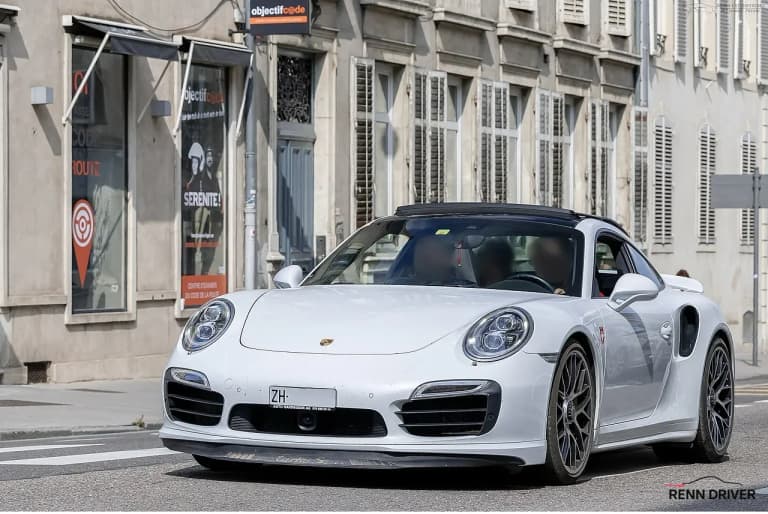
The 991 Turbo and Turbo S sit above the Carrera range. Both use a 3.8 liter twin turbo flat six, all-wheel drive, the wide body, and active aerodynamics. The dedicated guide covers their history and buying detail.
Porsche's 2014 US technical sheet lists 520 hp and 3.2 seconds to 60 mph for the 991.1 Turbo. The Turbo S is listed at 560 hp and 2.9 seconds.
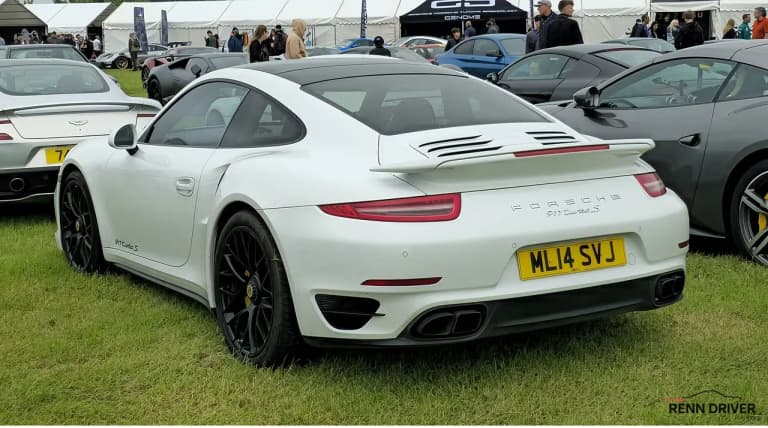
Porsche's 2017 technical specifications list 540 hp for the Turbo and 580 hp for the Turbo S. Porsche also revised the turbochargers, compressors, and intake ports. It quoted 2.8 seconds to 60 mph and 205 mph for the Turbo S.
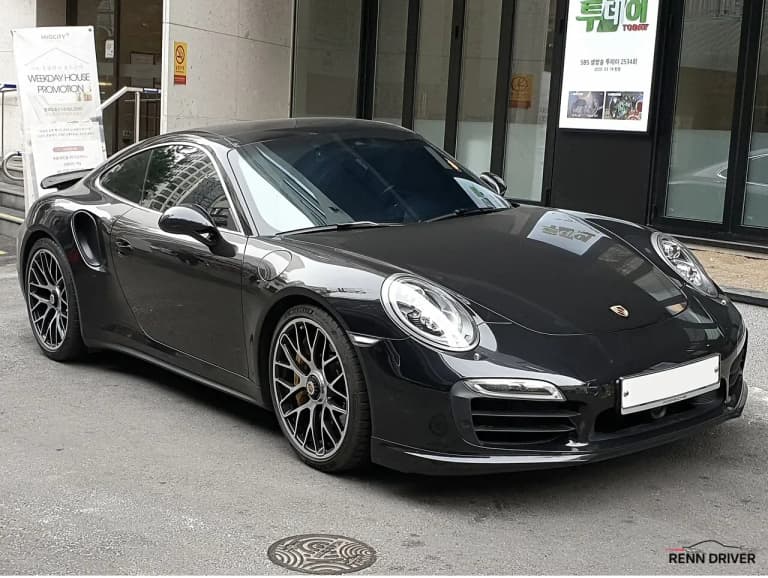
Both were also offered as Cabriolets with the same engine and drivetrain as their coupe equivalents.
The GT Cars: GT3, GT3 RS, GT2 RS
The GT3, GT3 RS, and GT2 RS each have a dedicated guide. This section keeps to the differences that place them within the 991 range.
GT3. The 991.1 GT3 used a 3.8 liter naturally aspirated flat six making 475 hp, with PDK and rear axle steering. NHTSA campaign 14V090000 documents Porsche's engine-replacement remedy for certain 2014 GT3s after an oil-leak and fire risk. Verify the VIN before buying. The 991.2 GT3 moved to 4.0 liters and 500 hp and returned a six speed manual option. Our 911 GT3 guide covers the model across generations.
GT3 Touring Package. This 991.2 package replaced the fixed wing with the Carrera's retractable spoiler and used a leather-led interior. It retained the 4.0 liter engine and launched with the six speed manual. See our GT3 Touring guide.
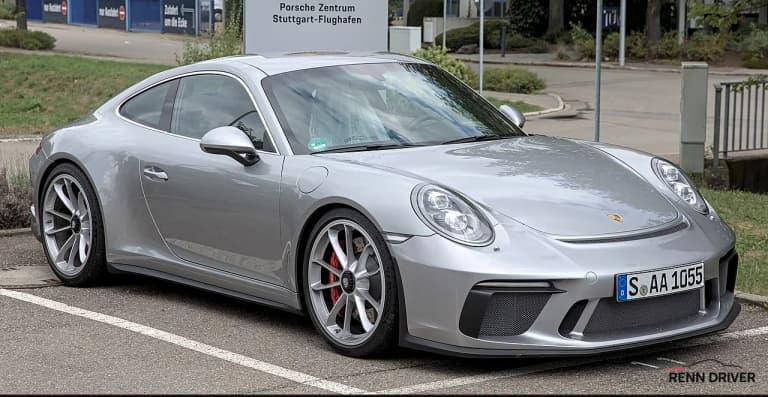
GT3 RS. The RS adds a wider body, fixed rear wing, firmer chassis settings, and more power. The 991.1 RS used a 4.0 liter making 500 hp; the 991.2 RS made 520 hp. Both use PDK and rear-wheel drive.
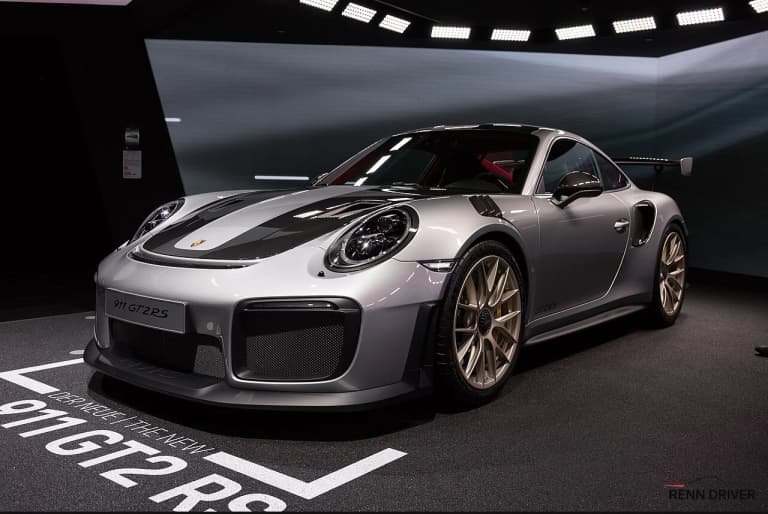
GT2 RS. The Turbo S engine retuned to 700 hp, driving the rear wheels only, with GT3 RS-grade weight reduction and aerodynamics. Porsche quoted 2.7 seconds to 60 mph and 211 mph, and the car set a 6:47.3 production lap of the Nordschleife. An optional Weissach Package added magnesium wheels, carbon anti-roll bars, and more carbon bodywork. Our GT2 RS guide has the detail.
Special Editions
911 R (2016). The 911 R paired a 500 hp, 4.0 liter naturally aspirated engine with a six speed manual and no fixed rear wing. Porsche limited production to 991 cars. Carbon body panels, bucket seats, reduced sound insulation, and cloth door pulls cut weight.
911 Speedster (2019). The final 991 used a 4.0 liter naturally aspirated engine, a six speed manual, rear-wheel drive, GT3-derived chassis hardware, and rear axle steering. Porsche built 1,948 units. Its shorter windscreen, double-bubble rear cover, and manual fabric roof separate it from the Cabriolet.
50th Anniversary Edition (2013). This rear-drive Carrera S used the wide body, Fuchs-style 20 inch wheels, a numbered plaque, and embossed headrests. Black, Graphite Gray Metallic, and Geyser Gray Metallic were offered. Porsche built 1,963 cars, matching the year the 901 prototype debuted.
Club Coupe (2012). Porsche's Club Coupe retrospective records the 13-car run. The Club Blau special was based on the Carrera S and used the wide body with a 430 hp power kit.
Engines, Transmissions, and Chassis
The 991.1 Carreras use naturally aspirated 3.4 and 3.8 liter flat sixes. The 991.2 Carreras use a 3.0 liter twin turbo, while the Turbo and Turbo S use a 3.8 liter twin turbo with variable turbine geometry. The GT3, GT3 RS, 911 R, and Speedster use naturally aspirated GT engines. The GT2 RS is the exception: it uses a 700 hp twin turbo engine.
Gearboxes. Carrera models offered a seven speed manual or seven speed PDK, depending on trim and market. PDK was mandatory on the 991.1 GT3, both GT3 RS versions, and the GT2 RS. The 911 R and the original GT3 Touring used a six speed manual only.
Chassis. The 991 uses MacPherson struts at the front and a multi-link rear suspension. PASM provides adaptive damping, while PASM Sport lowers selected models further. Rear axle steering appears on Turbo and GT variants, with availability varying by model. Sport Chrono equipment also varies by phase, trim, transmission, and market, so verify the option list on the individual car.
Brakes, cabin, and body. Brake size and PCCB availability vary by model and option list, so inspect what the car actually has. Inside, the 991 uses a central tachometer, supporting displays, and Porsche Communication Management. The 991.2 added updated infotainment with Apple CarPlay. The wide body is used on Carrera 4, Targa, Turbo, Turbo S, and Carrera GTS models, including rear-drive GTS versions.
991 Specs
Power figures and quoted US 0-60 times come from Porsche's US technical-specification archive. The 2012 Carrera sheet and 2017 Carrera sheet document the core Carrera rows. Porsche's GT2 RS launch release covers that model. The table uses Porsche's quickest listed configuration for each row, which may require PDK and Sport Chrono. Times vary by transmission, options, body style, and market.
| Model | Engine | Power | Quickest listed 0-60 mph* |
|---|---|---|---|
| 911 Carrera (991.1) | 3.4 flat six, naturally aspirated | 350 hp | 4.2 s |
| Carrera S (991.1) | 3.8 flat six, naturally aspirated | 400 hp | 3.9 s |
| Carrera GTS (991.1) | 3.8 flat six, naturally aspirated | 430 hp | 3.8 s |
| 911 Carrera (991.2) | 3.0 twin turbo flat six | 370 hp | 4.0 s |
| Carrera S (991.2) | 3.0 twin turbo flat six | 420 hp | 3.7 s |
| Carrera GTS (991.2) | 3.0 twin turbo flat six | 450 hp | 3.4 s |
| Carrera T (991.2) | 3.0 twin turbo flat six | 370 hp | 4.3 s manual |
| 911 Turbo (991.1 / 991.2) | 3.8 twin turbo flat six | 520 hp / 540 hp | 3.2 s / 2.9 s |
| Turbo S (991.1 / 991.2) | 3.8 twin turbo flat six | 560 hp / 580 hp | 2.9 s / 2.8 s |
| GT3 (991.1 / 991.2) | 3.8 / 4.0 flat six, naturally aspirated | 475 hp / 500 hp | 3.3 s / 3.2 s |
| GT3 RS (991.1 / 991.2) | 4.0 flat six, naturally aspirated | 500 hp / 520 hp | 3.1 s / 3.0 s |
| 911 R | 4.0 flat six, naturally aspirated | 500 hp | 3.7 s |
| 911 Speedster | 4.0 flat six, naturally aspirated | 502 hp | 3.8 s |
| GT2 RS | 3.8 twin turbo flat six | 700 hp | 2.7 s |
*Factory-published quickest configuration shown. Transmission, Sport Chrono, body style, and model year can change the result.
Buying a Used 991
The 991 spans standard Carreras, open-roof models, Turbos, GT cars, and limited editions. Prices vary too widely by country, mileage, condition, options, and service history for one static table to stay useful. Compare current listings only after matching the exact variant and equipment.
Start with the engine character and use case. Compare a 991.1 and 991.2 before deciding, then choose rear- or all-wheel drive, manual or PDK, and the body style. Treat Turbo, GT, 911 R, and Speedster pricing as separate markets rather than benchmarks for a Carrera.
What to look for
Start with the paperwork. Confirm the exact model year, variant, engine, drivetrain, and transmission. Then run the VIN through NHTSA's recall lookup and ask the seller to show that any open campaign was completed.
From there, a Porsche-specialist pre-purchase inspection should cover:
- Full service records, from a Porsche center or a known independent shop.
- A diagnostic scan for stored fault codes, plus over-rev data on GT and track-used cars.
- Cold start behavior, fluid leaks, smoke on startup, warning lights, and cooling-system condition.
- Clean PDK or manual operation, with clutch condition checked on manual cars.
- Brake, tire, suspension, and alignment condition.
- Water entry and drain condition on Cabriolet and Targa cars, where a clogged drain can let water into the cabin.
- Signs of accident repair, underbody damage, wheel condition, and a check that the option codes on the door sticker match what's actually fitted.
- PCCB rotor condition, but only on cars actually equipped with ceramic brakes.
Walk away if the seller refuses an independent inspection or cannot explain material accident repairs, warning lights, or missing records. An open recall is not automatically a reason to reject a car, but it must be identified and resolved through the correct campaign process.
Check optional systems only when the car has them. That includes PDCC, PCCB, Sport Chrono, PASM, and model-specific roof hardware. Use the maintenance schedule for the exact VIN and model year rather than a universal mileage rule. Our Porsche reliability guide explains why the individual car and its records matter more than a generation-wide label.
Running costs
Budget for scheduled servicing, tires, brakes, batteries, and age-related repairs. Costs change sharply with wheel size, brake type, body style, and optional chassis systems. If you are running one in Thailand, our guide to Porsche maintenance costs in Thailand covers local dealer, independent-shop, and parts considerations.
Frequently Asked Questions
What years is the Porsche 991?
US cars are titled as 2012 through 2019 model years. Porsche dates the generation 2011 to 2019 by build, with sales starting in late 2011 and the final car, a 911 Speedster, leaving the line on 20 December 2019 before the 992 took over.
What is the difference between the Porsche 991.1 and 991.2?
The engine. The 991.1 Carreras are naturally aspirated, 3.4 and 3.8 liters. The 991.2 Carreras use one 3.0 liter twin turbocharged flat six across the range. The 991.2 also brought four-point brake lights, revised bumpers, an updated PCM with Apple CarPlay, and two new models, the Carrera T and the GT3 Touring.
Is the Porsche 991 reliable?
No public source gives a defensible failure rate across every 991 variant. A smooth test drive, diagnostic scan, recall check, service history, and specialist inspection tell you more about one car than a generation-wide label.
Should I buy a manual or PDK 991?
Choose PDK if you prioritize quick shifts and easier traffic driving. Choose the manual if you want to operate the gearbox yourself. Availability narrows on GT cars: the 991.1 GT3 and both GT3 RS models are PDK-only, while the 911 R and original GT3 Touring are manual-only.
What is the best Porsche 991 to buy?
There is no universal best 991. Start with a Carrera or Carrera S, then choose 991.1 for naturally aspirated response or 991.2 for lower-rpm torque. Compare GTS, Targa, Turbo, and GT variants only when their extra equipment or different purpose matches how you will use the car.
How fast is the Porsche 991 Turbo S?
Porsche quoted 2.8 seconds to 60 mph and a 205 mph top speed for the 580 hp 991.2 Turbo S. The 991.1 Turbo S made 560 hp, with Porsche listing 2.9 seconds to 60 mph. Both are all-wheel drive and use the wide body.
What is the Porsche 911 GT3 RS?
The track-focused version of the GT3: wider body, fixed rear wing, more aggressive aero, stiffer suspension, and a higher state of tune on the naturally aspirated flat six. The 991.1 RS made 500 hp from 4.0 liters, the 991.2 RS 520 hp. Both are PDK-only and rear-wheel drive.
Is the Porsche 991 a good investment?
No one can reliably predict what a specific 991 will be worth later. Variant, originality, condition, mileage, options, documentation, and market timing all affect value. Buy the car that fits your use and treat any future appreciation as uncertain.
Does the Porsche 991 come in all wheel drive?
Yes. Rear-wheel-drive models include the Carrera, Carrera S, selected Carrera GTS versions, Carrera T, GT3, GT3 RS, GT2 RS, 911 R, and Speedster. Carrera 4, Carrera 4S, Targa, Turbo, and Turbo S models use Porsche Traction Management all-wheel drive, which varies torque distribution electronically.
What does the Porsche Sport Exhaust do?
It uses electronically controlled bypass valves to change exhaust volume and tone when selected. Porsche did not list it as a separate power increase, so treat it as a sound and equipment choice rather than a horsepower upgrade.
Images: Alexander Migl, CC BY-SA 4.0, David Villarreal Fernandez, CC BY-SA 2.0, TTTNIS, CC0, Matti Blume, CC BY-SA 4.0, Alexander-93, CC BY-SA 4.0, Calreyn88, CC BY-SA 4.0, all via Wikimedia Commons