The Porsche Panamera is a four-door grand tourer that pairs sports car performance with genuine luxury and back-seat space. It launched in 2009, now runs in its third generation, and produces anywhere from around 330 hp in the base car to 782 hp in the Turbo S E-Hybrid. It is the car you buy when a 911 is not practical enough but a regular luxury sedan is not exciting enough.
In this article, we’ll profile the Porsche Panamera across all three generations. We’ll cover its trims, performance, pricing, and reliability.
Contents
- 1 Porsche Panamera: Grand Tourer Explained
- 2 Panamera Generations: 970, 971, and 972
- 3 Panamera Body Styles: Sedan, Sport Turismo, and Executive
- 4 Panamera Trim Levels: Every Model Compared
- 5 Panamera Engine Output: V6, V8, and Hybrid
- 6 Panamera Fuel Economy and Efficiency
- 7 Panamera Performance: Speed and Handling
- 8 Panamera Interior: Space, Materials, and Technology
- 9 Panamera Design Evolution by Generation
- 10 Porsche Panamera Pricing: New and Used
- 11 Panamera Reliability and Ownership Costs
- 12 Panamera vs Taycan: Choosing the Right Four-Door Porsche
- 13 Frequently Asked Questions
Porsche Panamera: Grand Tourer Explained
The Porsche Panamera is a four-door, five-seat grand tourer built on a dedicated platform shared with Bentley and Audi. Porsche launched it in 2009 as a direct answer to the Mercedes-Benz S63 AMG and Audi RS7: a car that could carry a family in genuine comfort while driving the way only Porsche knows how.
The name comes from the Carrera Panamericana, a Mexican road race that Porsche dominated in the 1950s. The choice is deliberate. This is a car built for covering ground fast, not just posing outside a hotel. It sits between the Cayenne and the 911 in the Porsche hierarchy: more practical than the 911, more performance-focused than the SUV.
What makes the Panamera unusual is that it actually delivers on both halves of that promise. Most fast luxury sedans are fast in a straight line but feel heavy and numb through corners. The Panamera uses rear-wheel steering, active anti-roll bars, air suspension, and a PDK dual-clutch gearbox to shrink around the driver. The result is a 4,400-pound car that handles more like a sports sedan than a barge.
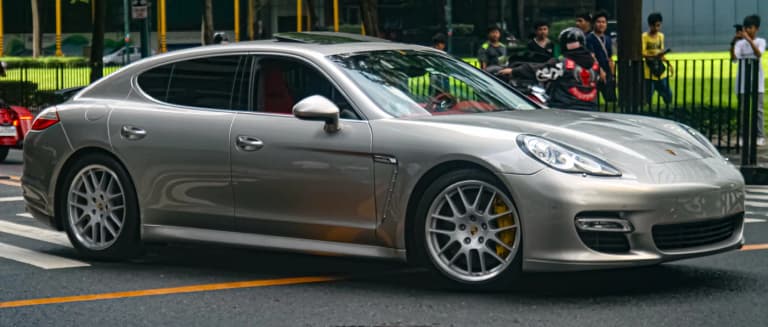
The Panamera also planted the seeds for modern Porsche. The four-door fastback shape, the long options list, the dual-personality brief: all of it carried forward into the Taycan and shaped how Porsche thinks about non-sports-car products. If you want a Porsche as a daily driver and need four proper doors, this is where the conversation starts.
Panamera Generations: 970, 971, and 972
There have been three generations of Porsche Panamera. Each kept the core grand-tourer identity while moving the technology and the styling forward in meaningful ways.
First Generation (970): 2009 to 2016
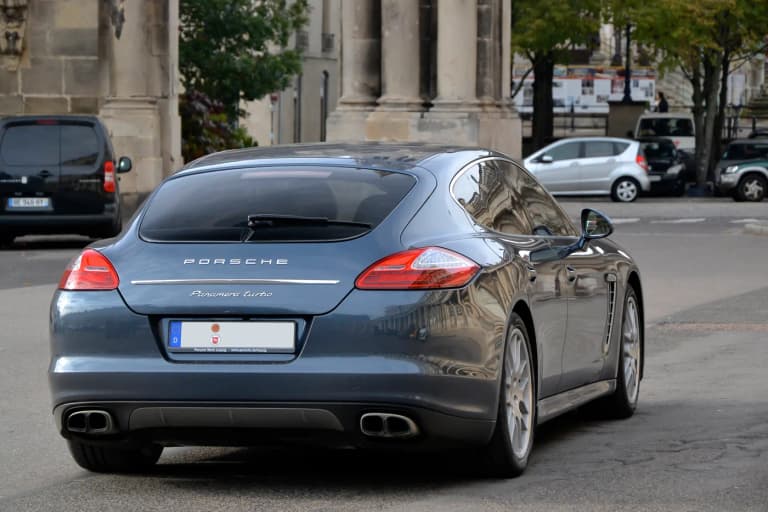
The 970 was a bold move from Porsche. The brand had never built a four-door production car, and the market was skeptical. Porsche launched it with a range of engines: a 3.6-liter V6, a 4.8-liter V8 in naturally aspirated and twin-turbo forms, and later a diesel and a hybrid. The top-spec Turbo S made 550 hp and ran 0 to 60 mph in 3.8 seconds.
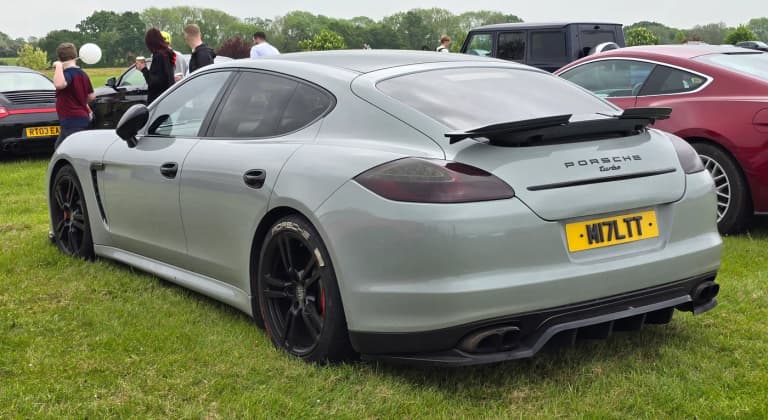
The 970 drew sharp criticism for its rear styling. The tall roofline and awkward fastback shape looked ungainly in photos, though it was far less offensive in person. Porsche acknowledged the issue with a facelift in 2013 that brought cleaner lines and revised lights. The driving experience was never in question. The criticism was always about how it looked parked, not how it felt moving.
Second Generation (971): 2016 to 2023
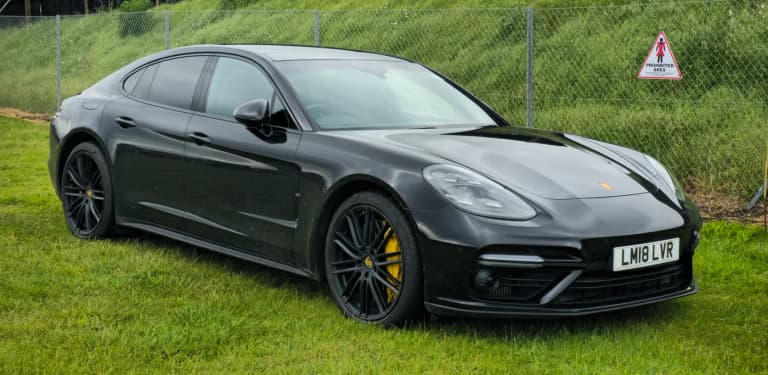
The 971 fixed everything the critics said about the 970. Porsche lowered the rear roofline, added a full-width LED light bar across the tail, and moved to a new modular engine family shared with Audi and Bentley. The interior went from button-heavy to touch-surface dominated, with a large central display and a digital instrument cluster. The 971 also introduced the Porsche Doppelkupplung (PDK) as the sole transmission option across the lineup, replacing the older dual-clutch unit with a faster, more refined 8-speed version.
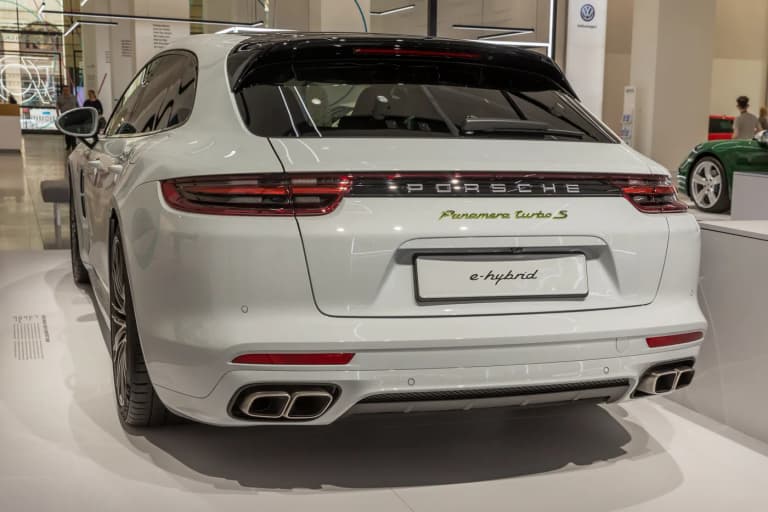
Power climbed across the range. The Turbo S made 630 hp, the Turbo S E-Hybrid combined a twin-turbo 4.0-liter V8 with a 136 hp electric motor for 680 hp combined output. A Sport Turismo wagon body arrived in 2017, giving the lineup a genuine shooting brake option. The 971 is widely considered the sweet spot of the Panamera’s life: better looking, better equipped, and still available used at reasonable prices for the 4S and GTS trims.
Third Generation (972): 2024 Onward
Porsche kept the 971’s silhouette for the 972 and focused the changes on technology, luxury, and efficiency. The headline feature is Porsche Active Ride, an active suspension system that uses electric actuators at each corner to keep the body flat through corners while simultaneously absorbing bumps. It is a genuine engineering achievement in a car this size and weight.
The plug-in hybrids gained a much larger 25.9 kWh battery, extending electric-only range to around 31 miles. The range-topping Turbo S E-Hybrid now makes 782 hp and hits 60 mph in 2.9 seconds, per the Porsche Newsroom. The Porsche Panamera 4 base variant debuted with a new mild-hybrid system that aids efficiency at highway speeds. The Sport Turismo body was discontinued for this generation, making the 971 Sport Turismo the last of that body style.
Panamera Body Styles: Sedan, Sport Turismo, and Executive
The Panamera has offered three distinct body styles across its three generations, each serving a different buyer.
Sedan vs Sport Turismo
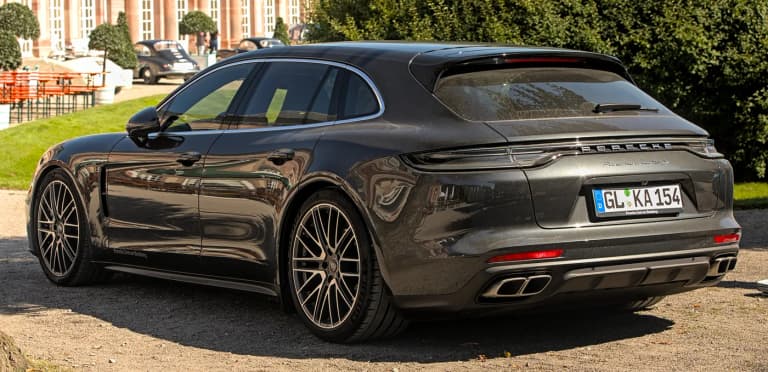
The standard sedan is a four-door fastback with a sloping roofline that gives it a sleek, coupe-like profile. Rear headroom is usable for most adults but not generous. The Panamera Sport Turismo, offered only on the second-generation 971, extended the roofline rearward to create a shooting-brake shape. It added useful cargo space and meaningfully better rear headroom without changing the car’s dynamic character at all. The Sport Turismo is the enthusiast choice precisely because it is rarer and more practical while being no slower.
Executive Long Wheelbase
The Executive version adds 150mm to the wheelbase, with all of that extra length going to rear legroom. It is aimed at buyers who want to be driven rather than drive. The Executive is available across multiple trims and makes the Panamera a genuine chauffeur car without giving up the front-seat driving experience. Rear passengers get fold-down tables, reclining seats, and optional massaging functions.
| Body Style | Generations | Key Advantage |
|---|---|---|
| Sedan | 970, 971, 972 | Sleekest looking, most common |
| Sport Turismo | 971 only | Better rear headroom, more cargo |
| Executive | 970, 971, 972 | 150mm extra rear legroom |
Panamera Trim Levels: Every Model Compared
The Panamera lineup follows the same logic as every other Porsche range: more money buys more power, more equipment, and a more specific character. Here is how the trims break down on the current 972.
Panamera and Panamera 4
The entry-level Panamera uses a 2.9-liter twin-turbo V6 making 330 hp with rear-wheel drive. The Panamera 4 adds all-wheel drive to the same engine for better traction in all conditions. These are the least expensive way into a new Porsche Panamera and are genuinely quick for a four-door luxury car. They lack the drama of the V8 variants, but they cover long distances in exceptional comfort and are the easiest to run day to day.
Panamera 4S
The Panamera 4S is the sweet spot most buyers end up at. It uses a more powerful version of the twin-turbo V6, making 440 hp and reaching 60 mph in around 4.0 seconds. All-wheel drive is standard. The Porsche Panamera 4S hits hard enough to feel genuinely fast, has a longer standard equipment list than the base car, and costs significantly less than the V8 variants. On the used market, a 971 Panamera 4S is the trim that offers the best combination of performance, equipment, and manageable running costs.
Panamera GTS
The GTS is the driver’s trim. It uses a twin-turbo 4.0-liter V8 making 493 hp in the current car, but the real point of the Panamera GTS is the chassis setup. It runs lower, stiffer, and more focused than the Turbo, with Sport Exhaust standard and a tuning that prioritizes feel over outright comfort. The GTS badge has always meant the same thing across the Porsche lineup: the most driver-focused version short of the track-only GT cars. On the Panamera it delivers exactly that.
Panamera Turbo and Turbo S
The Turbo brings a 550 hp twin-turbo V8 and the full luxury options list: rear-axle steering, active anti-roll bars, the largest brake package, and the most comprehensive driver-assist suite. The Turbo S pushes to 630 hp (on the 971) with more aggressive calibration throughout. Both models are fast enough to embarrass sports cars and comfortable enough to cross continents in a single day. They are also expensive to run: tires, service, and any suspension work all reflect the performance on offer.
E-Hybrid Models
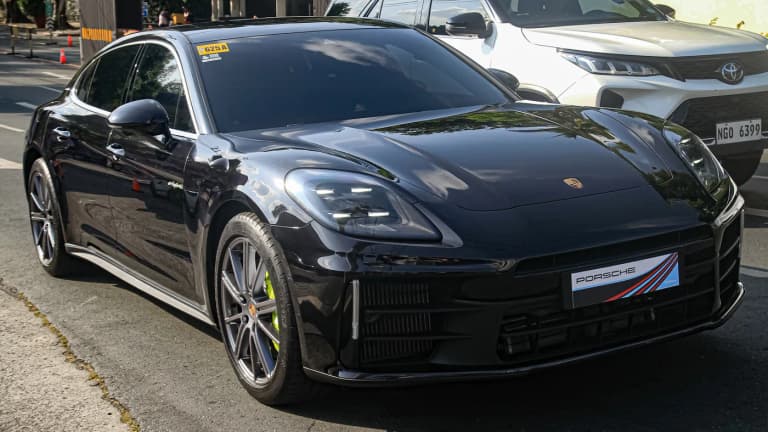
The plug-in hybrid variants sit across multiple trim levels. The Panamera 4S E-Hybrid pairs the V6 with an electric motor for a combined 516 hp total. The Turbo S E-Hybrid is the flagship, combining the twin-turbo V8 with a 136 hp electric motor for 782 hp combined and a 0-60 mph time of 2.9 seconds. On the 972, the larger battery means the hybrids can cover real urban distances on electric power alone, making them genuinely efficient in city driving while being brutally fast when asked. They are not a compromise. They sit above the pure petrol cars in the lineup, not alongside them.
Panamera Engine Output: V6, V8, and Hybrid
The Panamera has used three engine families across its life. Here is how each one works.
V6 Engines
The current 2.9-liter twin-turbo V6 is a shared Volkswagen Group unit used across the 971 and 972. In the base car it makes 330 hp. In the 4S it makes 440 hp through different turbocharger mapping and intercooling. It is a smooth, refined engine that pulls cleanly from low revs. It lacks the acoustic character of the V8 but it is not slow, and it is significantly cheaper to service.
V8 Engines
The 4.0-liter twin-turbo V8 is the engine that defines the upper Panamera range. It appeared in the 971 and carries into the 972. In GTS trim it makes around 480 hp with a more free-revving character than the Turbo. In Turbo trim it makes 550 hp, with the Turbo S reaching 630 hp through higher boost and revised cooling. The V8 sounds right in a way the V6 does not: it has a depth and growl through the exhaust that the smaller engine cannot replicate, especially with the Sport Exhaust option open.
Hybrid Powertrain
The hybrid system pairs either the V6 or V8 with a permanently excited synchronous electric motor integrated into the 8-speed PDK gearbox. On the 972, the system uses a 25.9 kWh battery versus the 17.9 kWh unit on late 971 cars. The motor fills in torque between gear changes and accelerates the car quietly through traffic. In E-Power mode, the Turbo S E-Hybrid can cover around 31 miles on electricity alone at speeds up to 87 mph. The combined system output of 782 hp makes it the fastest production Panamera ever built. For buyers focused on running costs, the plug-in hybrids also deliver far better fuel economy than the pure petrol cars in urban driving.
| Trim | Engine | Power | 0-60 mph |
|---|---|---|---|
| Panamera 4 (RWD) | 2.9L twin-turbo V6 | 330 hp | 5.3 sec |
| Panamera 4 (AWD) | 2.9L twin-turbo V6 | 330 hp | 5.1 sec |
| 4S | 2.9L twin-turbo V6 | 440 hp | 4.0 sec |
| GTS | 4.0L twin-turbo V8 | 480 hp | 3.7 sec |
| Turbo | 4.0L twin-turbo V8 | 550 hp | 3.3 sec |
| Turbo S E-Hybrid | 4.0L V8 + electric | 782 hp combined | 2.9 sec |
Figures above are for the 972 generation per the Porsche Newsroom. Earlier generations differ, particularly in output from the top hybrids.
Panamera Fuel Economy and Efficiency
Fuel economy is not the Panamera’s main selling point, but it is not as bad as the performance figures suggest. EPA ratings vary significantly by trim and drivetrain. The Panamera 4 with the base V6 returns around 18 mpg city and 26 mpg highway (combined approximately 21 mpg EPA). The 4S drops slightly due to higher output tuning. The V8 GTS and Turbo trim return around 16 mpg city and 22 mpg highway in combined EPA testing.
The plug-in hybrids change the calculation entirely. The Panamera 4S E-Hybrid returns an EPA combined MPGe figure that covers typical urban commuting distances on electric power alone. When driven on a full charge before switching to the petrol engine, real-world combined fuel economy can be well above 40 MPGe equivalent for buyers who charge regularly. Buyers who never charge will see worse results than the pure petrol cars. All fuel economy figures are EPA estimates; real-world results depend on driving style, trip type, and how often the hybrids are charged.
| Trim | City mpg | Highway mpg | Combined mpg |
|---|---|---|---|
| Panamera 4 (V6) | 18 | 26 | 21 |
| Panamera 4S (V6) | 17 | 25 | 20 |
| Panamera GTS (V8) | 15 | 21 | 17 |
| Panamera Turbo (V8) | 16 | 22 | 18 |
| Panamera 4S E-Hybrid | 27e MPGe | — | varies with charge |
These numbers place the Porsche Panamera in the middle of the luxury performance class, better than its competitors at equivalent power levels. It is not a car you buy for fuel economy. The hybrid variants are the right choice for buyers who do significant city driving and can charge at home.
Panamera Performance: Speed and Handling
The Porsche Panamera is genuinely fast by any standard, not just for its class. Even the base 330 hp V6 car gets to 60 mph in 5.3 seconds, which is quicker than most hot hatches. The numbers improve sharply as you move up the range.
0 to 60 Times by Trim
The Turbo S E-Hybrid’s 2.9-second 0-60 mph time puts it ahead of the 911 Carrera S and in the same conversation as the 911 Turbo. On a highway on-ramp, the Turbo S E-Hybrid is brutally, absurdly fast for a car that can carry four adults and their bags. The V8 Turbo at 3.3 seconds 0-60 mph is not far behind, and it feels more linear and progressive than the hybrid’s instant electric torque hit.
Handling and Suspension
The Panamera’s real trick is how it handles for something this large. The 971 and 972 both offer rear-axle steering as standard on Turbo trims: at low speed it turns the rear wheels opposite to the fronts to shrink the turning circle; at high speed it steers in the same direction to add stability. The agility you feel through a corner is real. The car changes direction more willingly than its footprint suggests. Porsche Traction Management (PTM) actively distributes drive between front and rear axles to keep all four wheels working together, which adds both safety and dynamic confidence on all surfaces.
The 972 adds Porsche Active Ride, which uses electric actuators at each corner to actively push and pull the body. It virtually eliminates body roll while keeping the ride compliant. It is the most sophisticated suspension system ever fitted to a Panamera, and it sets the third generation apart from every competitor in this class. The combination of Active Ride, rear-axle steering, and PTM gives the 972 a level of agility that no competitor of this size and comfort level can match.
Panamera Interior: Space, Materials, and Technology
The Panamera’s interior is where the luxury car half of its personality shows most clearly. Materials quality across all three generations is excellent, and the 971 and 972 in particular match or exceed anything from Mercedes or BMW in terms of fit, finish, and material choice. The seats are among the best in any production car: deeply bolstered for support during spirited driving, but with enough adjustment to be comfortable on a long motorway run.
Rear Seat Space
The Panamera seats four in standard form, with a center tunnel that limits the fifth seat to short trips. Rear headroom on the sedan is tighter than in a traditional three-box saloon because of the fastback roofline, but most adults under six feet will fit comfortably. The Sport Turismo adds meaningful headroom. The Executive long-wheelbase adds enough rear legroom to use as a proper chauffeur car. Rear passengers in the standard car are not an afterthought, but they are not as pampered as they would be in a Mercedes S-Class.
Technology and Infotainment
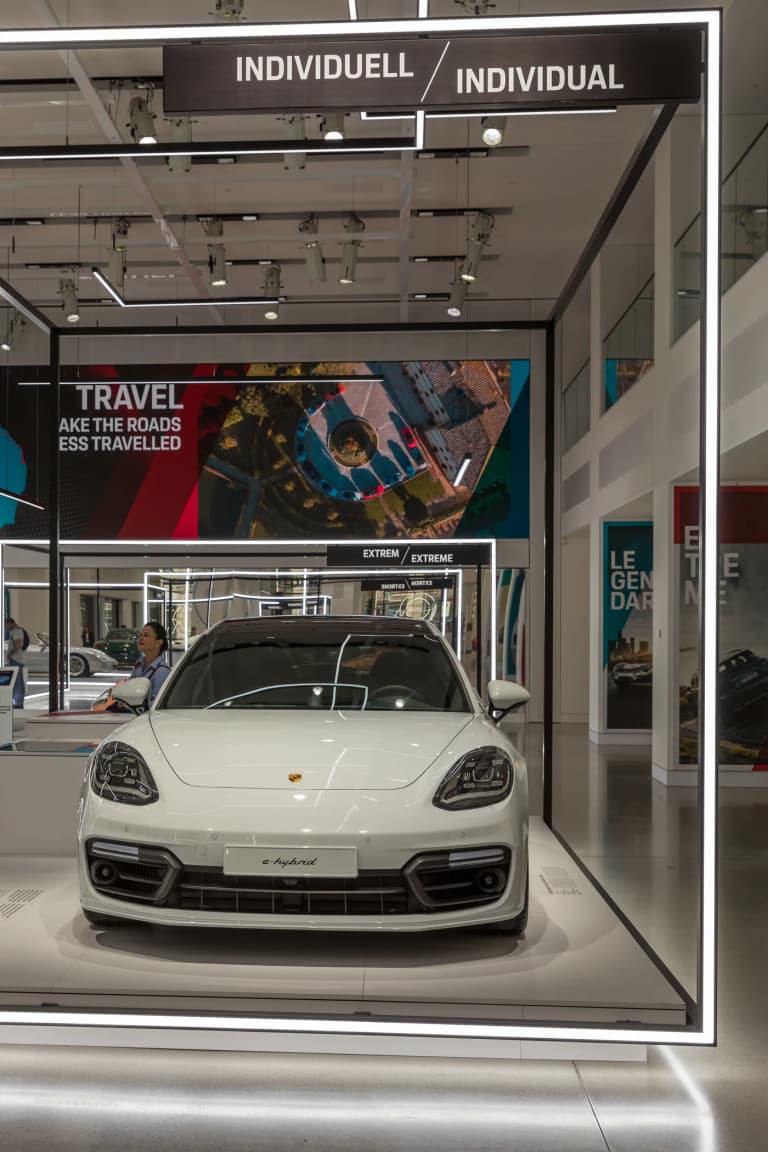
The technology story runs in a straight line across the three generations. The 970 used a button-heavy center console with a relatively small central screen. The 971 replaced most physical buttons with a Porsche Communication Management touchscreen system and added a fully digital instrument cluster. The 972 goes further with the new Porsche Driver Experience system: a curved dashboard display, a passenger screen as an option, and integration that connects every system in the car through a single interface.
Connectivity features include wireless Apple CarPlay, over-the-air updates on the 972, and a suite of driver-assist systems that range from adaptive cruise control to parking assist with cameras. The 972 adds a full traffic-jam assist system and improved lane-keeping. None of it is as seamlessly integrated as what you get from a Tesla, but it is significantly better than either predecessor and it feels like a proper German luxury car interior rather than a compromised tech demo.
Panamera Design Evolution by Generation
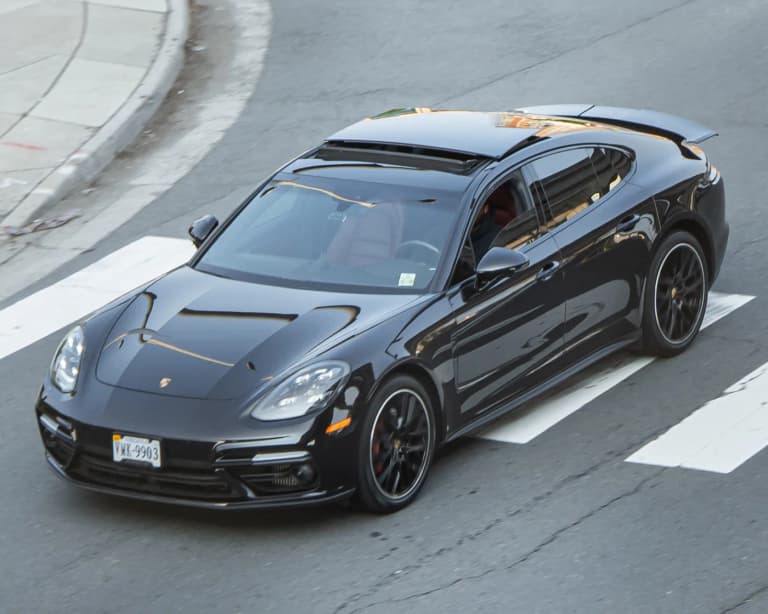
The Panamera’s design history is a story of fixing one problem at a time. The 970’s front end was strong: round headlights, a low wide nose, and a hood that rose toward the windshield in the style of the 911. From the front it looked like a stretched Porsche. The rear was the problem. The tall fastback with small round taillights looked confused and heavy.
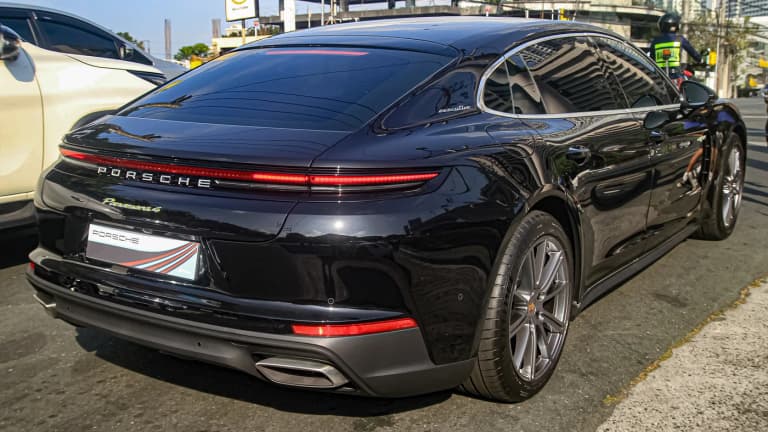
The 971 solved it. Porsche lowered the rear roofline, stretched the taillights into a full-width LED bar, and cleaned up the haunches. The result was a car that finally looked as good as it drove. The 971 is the generation where Porsche stopped apologizing for the Panamera’s shape and started showing it off.
The 972 refines rather than reinvents. The proportions are almost identical to the 971 with minor surface changes: slightly wider front, revised headlights, and a cleaner rear diffuser. Porsche has found a design language for this car and they are sticking with it. The Sport Turismo body was not carried over, which upset some buyers but keeps the sedan line cleaner.
Porsche Panamera Pricing: New and Used
The Porsche Panamera is an expensive car to buy new and a significantly more affordable one to buy used, particularly in the first generation. The gap between a new Turbo S E-Hybrid and a well-kept used 970 Turbo is enormous, but so is the difference in what you get.
New Panamera Pricing
For the 2024 model year 972, US base prices start at approximately $103,400 for the Panamera and climb through the range. The Panamera 4S sits around $120,000, the GTS around $145,000, and the Turbo around $175,000. The Turbo S E-Hybrid starts above $230,000. Options add quickly. A fully loaded Turbo S E-Hybrid Executive can approach $300,000 once you work through Porsche’s options catalog. These figures are pre-options; verify current pricing at the official Porsche USA site.
At a Porsche dealer, the conversation quickly moves beyond sticker price. Porsche dealer pricing includes destination charges and preparation fees that add a few thousand dollars to the base figure. Options like the Burmester sound system, the panoramic roof, and seat ventilation are expensive individually. A Sport Chrono Package, night vision assist, and Lane Change Assist together add another $5,000 to $8,000. Most buyers end up $15,000 to $30,000 above sticker by the time they have configured the car the way they want. Check with your local Porsche dealer for final out-the-door pricing in your market.
Used Panamera Prices by Generation
The used market splits cleanly by generation. First-generation 970 cars have depreciated heavily and can be found from around $30,000 to $60,000 depending on mileage, trim, and condition. That low entry price is genuinely tempting, but it comes with elevated risk covered in the reliability section below. Second-generation 971 cars hold value better and the cleanest examples with service history command appropriate premiums. A Porsche Panamera 4 or 4S from the 971 generation in good condition is a realistic daily driver for most buyers at that budget. Buying from a Porsche dealer CPO program adds a used-car warranty and inspection that is worth the premium on a car this complex. Private sales can be cheaper, but require a more careful pre-purchase inspection. If you want to compare with other ways into the brand, check our guide on the most affordable Porsche models.
| Generation | Typical Used Price Range | Best-Value Trim |
|---|---|---|
| 970 (2009-2016) | $25,000 to $65,000 | 4S with good service history |
| 971 (2016-2023) | $60,000 to $130,000 | 4S or GTS |
| 972 (2024+) | $95,000+ (near-new CPO) | 4S or 4S E-Hybrid |
Panamera Reliability and Ownership Costs
A well-maintained Panamera from any generation is a dependable car. The question is not whether it can be reliable. It is whether the specific example you are looking at has been maintained to the standard it requires. These are not Corollas. Every service interval, every fluid, and every wear item costs more than it would on a mainstream car, and the Panamera has several specific areas that deserve extra attention before buying.
Common Problems to Watch For
On the 970, the biggest concerns are the air suspension, the PDK dual-clutch gearbox, and the Panamera Turbo’s cooling system. Air suspension failures on neglected cars are not catastrophic but they are expensive. Early PDK units need their fluid changed on schedule, and many owners skipped it. The 970 V8 engines are fundamentally strong but the turbos and associated cooling components on the Turbo model deserve inspection.
On the 971, the main watch item is again the air suspension, particularly the air struts and compressor on cars with higher mileage. The hybrid battery on E-Hybrid models has proven durable, but it is worth checking charge acceptance and the high-voltage system health with a Porsche PIWIS diagnostic tool before purchase. The 971’s PDK is a refinement of the 970’s unit and is more reliable when serviced correctly.
On all generations, avoid cars with incomplete service records, unknown previous owners, or any sign of deferred maintenance. The savings on a cheap Panamera disappear after one suspension rebuild or gearbox service. Get a pre-purchase inspection from a Porsche specialist, not a generalist shop.
Ownership Costs
Annual service costs on a well-maintained Panamera typically run from $1,500 to $3,000 depending on the service interval, the model year, and what needs to be done. Major services every four years or 40,000 miles involve more components and cost more. Tires are a significant ongoing cost. The wide, performance-spec rubber on the Turbo models wears faster than standard tires and costs more to replace. Brake pads and rotors are another regular expense if you use the car the way it was designed to be used. Extended warranty coverage from a Porsche dealer is worth factoring into the total cost of ownership on used cars, particularly for the air suspension and hybrid battery systems.
For buyers in Thailand, import duties and excise taxes make new Panamera pricing substantially higher than in the US or Europe. CBU (fully built) imports attract import taxes of around 80% on top of the base vehicle price, plus domestic excise taxes based on engine displacement, plus VAT. A Panamera that costs $120,000 in the US could easily land at 10 to 12 million THB in Thailand once all taxes and dealer fees are accounted for. Our guide to Porsche maintenance costs in Thailand covers what to expect for ongoing running expenses in the Thai market.
Panamera vs Taycan: Choosing the Right Four-Door Porsche
The Panamera and the Taycan are the two four-door Porsches, and the choice between them is more straightforward than it might look. They are genuinely different tools.
The Taycan is fully electric, faster off the line than any Panamera (the Turbo S hits 60 mph in under 2.7 seconds), and significantly more modern in its technology and driving character. It suits buyers who mostly drive in cities, have access to home charging, and want the cleanest, most technologically advanced thing Porsche makes. The Taycan’s range anxiety on long trips is real in markets where fast chargers are not dense. If you spend time in rural or intercity driving without reliable charging infrastructure, that matters.
The Panamera Turbo S E-Hybrid bridges the gap in a different way. It can run electric for short urban trips, then switch to the V8 for the motorway without any charging stop. It is heavier than the Taycan and its interior tech is one generation behind, but it covers longer distances without planning and appeals to buyers who are not ready to commit fully to electric. If you travel regularly between cities and cannot guarantee fast-charging access, the hybrid Panamera is the more practical choice.
For a deeper comparison, see our full Panamera vs Taycan guide. The short answer: buy the Taycan if you can charge it reliably; buy the Panamera if you cannot, or if you want more of a traditional Porsche grand-tourer experience.
Frequently Asked Questions
Is the Panamera a reliable car?
A well-maintained Panamera is dependable, but repairs are expensive and the car demands proper servicing. The biggest risks are on cheaper first-generation cars with incomplete maintenance records. Always get a pre-purchase inspection from a Porsche specialist before buying used.
How many generations are there?
Three. The 970 ran from 2009 to 2016, the 971 from 2016 to 2023, and the 972 arrived for the 2024 model year. Each generation brought significant styling and technology improvements while keeping the grand-tourer character intact.
How does the Panamera compare to the Taycan?
The Panamera is a petrol and plug-in hybrid grand tourer while the Taycan is fully electric. The Panamera suits long-distance driving without charging infrastructure; the Taycan is faster, more modern, and suits buyers with reliable home or workplace charging.
Is the Panamera faster than a 911?
The Turbo S E-Hybrid hits 60 mph in 2.9 seconds, which beats the 911 Carrera S and sits close to the base 911 Turbo. On a track the 911 wins on every metric because it is lighter and more focused. On the road the gap is much smaller than the weight difference implies.
Which trim should I buy?
For most buyers the 4S hits the sweet spot: 440 hp, all-wheel drive, and a more manageable running cost than the V8 variants. The GTS is the driver’s choice if you want the V8 character without the full Turbo price. On a budget, a clean 971 4S or GTS is a far smarter buy than the cheapest 970 Turbo you can find.
What does a Panamera cost?
New 2024 pricing starts around $103,400 in the US and climbs past $230,000 for the Turbo S E-Hybrid before options. Used first-generation 970 cars start from around $25,000 to $30,000 for high-mileage examples and up to $65,000 for clean Turbos. Second-generation 971 cars in good condition typically range from $60,000 to $130,000 depending on trim and mileage.
Images: Hero (black 971 Turbo) by OWS Photography, CC BY 4.0. 970 Turbo rear Paris by Alexandre Prévot, CC BY-SA 2.0. 971 Turbo S at show by Calreyn88, CC BY-SA 4.0. Sport Turismo rear by Alexander Migl, CC BY-SA 4.0. 972 Executive front and 972 Executive rear by Ethan Llamas, CC BY-SA 4.0. 971 E-Hybrid Berlin display by Matti Blume, CC BY-SA 4.0. 970 Turbo gray rear by Calreyn88, CC BY-SA 4.0. Turbo S E-Hybrid Sport Turismo motor show by Matti Blume, CC BY-SA 4.0. Specifications confirmed via the Porsche Newsroom and Wikipedia.