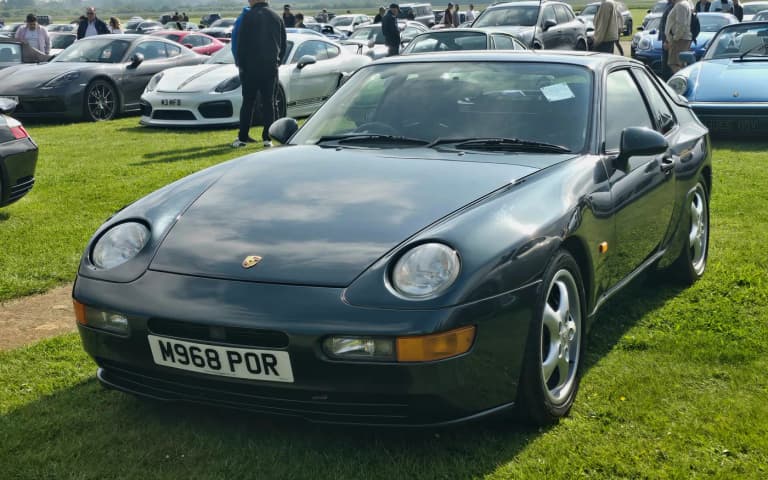
The Porsche 968 was the final and most developed of the front-engine, transaxle Porsches, built from 1992 to 1995. It used a 3.0-liter four-cylinder with VarioCam variable valve timing producing around 240 horsepower, the largest production four-cylinder of its day. The lightweight 968 Club Sport is the enthusiast favorite, and with low production numbers the 968 has become an appreciating modern classic.
In this article, we’ll explain the Porsche 968, the final and most developed transaxle Porsche. We’ll cover its VarioCam engine, the Club Sport, the rare Turbo S, and current values.
Contents
What Is the Porsche 968
The Porsche 968 was the last chapter in a story that began with the 924 in the 1970s. It was a front-engine, rear-transaxle sports car, the most refined and most powerful version of a layout Porsche had spent two decades perfecting.
Although it shared its basic architecture with the 944, Porsche revised the car so heavily that it earned a new name. New styling, a larger and smarter engine, and a six-speed gearbox made the 968 a genuine step forward rather than a facelift.
It arrived just as buyer tastes were shifting and Porsche’s finances were strained, so it never sold in large numbers. That commercial struggle is exactly why the 968 is now prized: it is rare, well engineered, and the final flowering of a beloved Porsche bloodline.
The End of a 20-Year Line
The 968 took over the entry-level role from the 944 in 1992. By then the basic transaxle concept was 20 years old, and the 968 represented its ultimate development. Porsche restyled the nose and tail with smoother, more modern surfaces and pop-up headlights that echoed the larger 928.
Sales were slow in a tough market, and the 968 was discontinued in 1995 at the same time as the 928. Their departure left Porsche, briefly, with only the 911 in production, until the Boxster arrived to rescue the company. The 968 therefore marks the very end of Porsche’s first front-engine era.
The VarioCam Engine
The 968 used a 3.0-liter four-cylinder engine, the largest-displacement production four-cylinder of its time. Its key advance was VarioCam, Porsche’s first variable valve timing system, which adjusted the intake camshaft timing for a broader spread of power and torque.
The result was around 240 horsepower and strong, flexible performance, all from a smooth four-cylinder helped by the balance-shaft technology inherited from the 944. Combined with a slick six-speed manual gearbox, the engine gave the 968 genuinely quick real-world pace.
Special 968s: Club Sport and Turbo S
The version enthusiasts chase is the 968 Club Sport. Offered from late 1992, it stripped out much of the standard car’s luxury equipment to save weight and sharpen the focus. Sound deadening was reduced, electric windows gave way to manual cranks, and rear seats were removed.
The Club Sport also received firmer, lower suspension and a more track-oriented setup. The result was one of the finest-handling Porsches of the 1990s, a car that many testers rated above the contemporary 911 on a tight, twisting road. Only around 1,900 Club Sports were built, which has made them increasingly sought after.
The Rare 968 Turbo S
The ultimate 968 was the Turbo S, a homologation-driven special that combined a turbocharged 3.0-liter engine with around 305 horsepower, race-derived suspension, and aggressive aerodynamics. It was savagely quick and built purely for performance.
Only around 14 Turbo S road cars were produced, all for mainland Europe, making it one of the rarest production Porsches of the era. Genuine examples almost never appear for sale, and when they do, they command extraordinary prices that dwarf those of the standard car.
Design, Body Styles, and Driving
The 968 was offered as a coupe and a cabriolet. Its styling was the cleanest of the transaxle family, with smooth bumpers integrated into the body and the distinctive pop-up headlights that linked it visually to the 928.
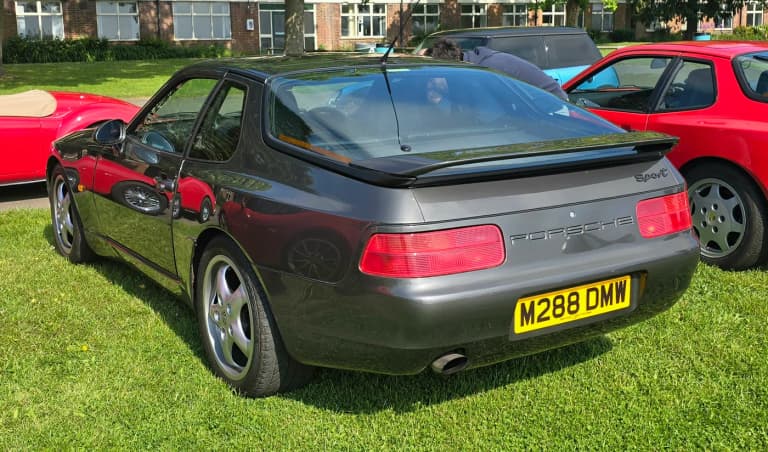
The coupe is the purist’s choice and the only body style offered as a Club Sport. The cabriolet adds open-air appeal and is rarer in some markets. Both share the same well-resolved looks that have aged better than many of the 968’s contemporaries.
Driving Character
Like the 944 before it, the 968’s strength is balance. The transaxle layout gives near-equal weight distribution, and the steering and chassis reward smooth, committed driving. The 3.0-liter engine adds enough torque to make the car genuinely brisk, not just nimble.
The Club Sport takes this further, with sharper responses and a more connected feel that has earned it a cult following. For drivers who value handling precision over straight-line speed or badge prestige, the 968 is one of the most rewarding classic Porsches available.
Values and Ownership
The 968 has appreciated steadily as enthusiasts have recognized its quality and rarity, with the Club Sport leading the way.
| Variant | Condition | Approx. Value |
|---|---|---|
| 968 Coupe | Good to excellent | $25,000 to $50,000 |
| 968 Cabriolet | Good to excellent | $25,000 to $45,000 |
| 968 Club Sport | Excellent | $50,000 to $100,000+ |
| 968 Turbo S | Documented | $500,000 to $1,000,000+ |
Mechanically the 968 is robust, but as with all of this family the timing and balance-shaft belts are critical and must be replaced on schedule. Documented belt history is essential. Beyond that, look for rust, worn suspension, and electrical niggles. A well-maintained Club Sport is the standout buy. Figures are 2026 estimates.
Frequently Asked Questions
What is the difference between the 944 and the 968?
The 968 was a heavily revised evolution of the 944. It used a larger 3.0-liter engine with VarioCam variable valve timing, a six-speed gearbox, and new styling with smoother bumpers and pop-up headlights. Porsche considered the changes significant enough to justify a new model name.
What is the Porsche 968 Club Sport?
The Club Sport is a lighter, more focused version of the 968 built from late 1992. It removed luxury equipment to save weight and added firmer, lower suspension. Around 1,900 were built, and it is widely regarded as one of the best-handling Porsches of the 1990s.
How rare is the Porsche 968 Turbo S?
Extremely rare. Only around 14 road-going 968 Turbo S cars were built, all for mainland Europe. With around 305 horsepower and race-derived hardware, it is the ultimate 968 and one of the rarest production Porsches of its era.
Was the Porsche 968 the last front-engine Porsche of its time?
The 968 was the last of the front-engine transaxle line that began with the 924. It was discontinued in 1995 alongside the 928, which briefly left Porsche with only the 911 in production until the Boxster arrived.
How much is a Porsche 968 worth?
Standard 968 coupes and cabriolets trade between roughly $25,000 and $50,000. The Club Sport ranges from $50,000 to over $100,000, and the ultra-rare Turbo S can exceed $500,000. Condition and documented belt history strongly affect value.
Is the Porsche 968 reliable?
Yes, the 968 is mechanically robust, but the timing and balance-shaft belts must be replaced on schedule because a failure can destroy the engine. With documented belt service and attention to rust and suspension wear, the 968 is a dependable modern classic.
Images: Hero 968 coupe and 968 rear view by Calreyn88, CC BY-SA 4.0. Via Wikimedia Commons. Value figures are 2026 market estimates.