Quick Answer: The Porsche 964 Turbo carried the single-turbo, rear-wheel-drive 911 Turbo formula into the 964 generation. It began with the 3.3-liter model before Porsche introduced the rarer 3.6-liter version.
In this article, we'll compare Porsche 964 Turbo variants. We'll cover 3.3 versus 3.6, special editions, and buying advice.
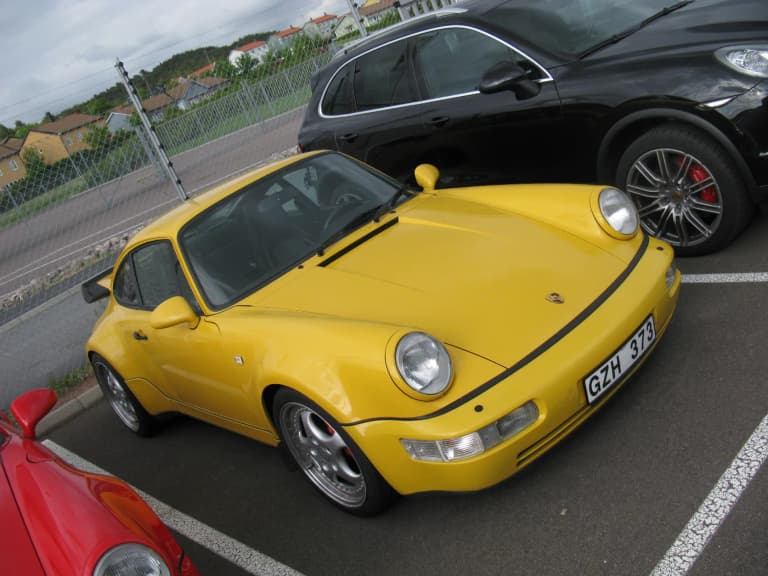
Presented to the public in December 1989 as a new model year within the 964 generation, it carried over the iconic rear-engine layout but arrived with modernized styling, ABS, power steering, and an all-new coil-spring suspension. The Turbo did not reach showrooms until 1990, a year after the Carrera, because Porsche carried the proven 3.3-liter turbo engine over from the outgoing car while the rest of the range moved on.
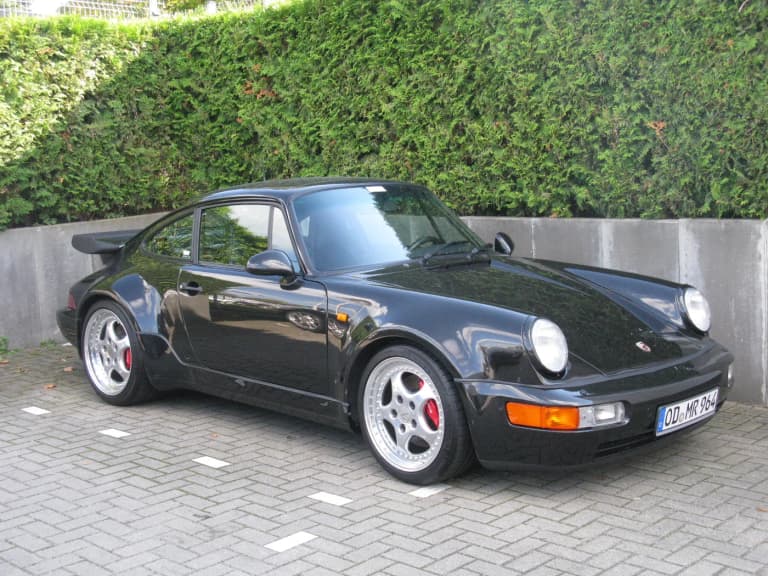
While Carrera models dominated sales, the Turbo sat at the top of the food chain. It looked tougher, drove harder, and cost significantly more. For today’s buyers, understanding the different turbo variants, the model year changes, and the specs is essential, because the wrong example can be merely cool, while the right one could be investment-grade gold.
Contents
- 1 Quick Summary
- 2 From 930 to 964: The Changes
- 3 The Turbo 3.3, 3.6, and How They Compare
- 3.1 964 Turbo 3.6: The One Everyone Wants
- 3.2 964 Turbo 3.3 vs 3.6: Which to Buy
- 4 Special Editions: Turbo S, X88, Leichtbau
- 5 Driving Experience + Engine Tech
- 6 What to Look For When Buying
- 7 Market Trends & Collectibility
- 8 Fun Facts
- 9 Frequently Asked Questions (FAQs)
- 10 Conclusion
Quick Summary
- Production Years: 1990–1994
- Engine: 3.3L → 3.6L single-turbo flat-six
- Power: 320 PS (235 kW) → 360 PS (265 kW)
- Torque: up to 520 Nm on the 3.6
- Transmission: 5-speed manual G50 (Tiptronic never offered on the Turbo)
- Top Speed: ~167–174 mph depending on version
- Layout: Rear-engine, rear-wheel drive
- Legacy: Last hand-built 911 Turbo, the bridge between the wild 930 and the refined 993
From 930 to 964: The Changes
The 964 generation replaced its predecessor, the legendary Porsche 930, after a 14-year reign. The earlier G model cars had already turned the 911 Turbo into a global icon, and the 964 was tasked with pushing the formula further without throwing away what made it work.
Porsche softened the edges slightly for this new model year: improved aerodynamics, modern safety electronics, ABS, coil-spring suspension in place of torsion bars, and a more comfortable interior. Power steering arrived for the first time on a 911 Turbo, which made the car far less intimidating to drive at low speed.
But it was not a clean-sheet redesign. The standard 964 Turbo 3.3 still used a developed version of the 3.3-liter engine carried over from the outgoing 930, and much of the aggressive visual language stayed: the deep chin spoiler, the wide rear fenders, functional air inlets, and that towering whale-tail rear spoiler familiar to every Porsche 911 fan.
Although Porsche offered Targa and Cabriolet versions of the Carrera, the Turbo was sold only as a coupe. It reinforced its purpose as the flagship vehicle in the lineup, the version you bought when you wanted the fastest air-cooled 911 money could buy.
The Turbo 3.3, 3.6, and How They Compare
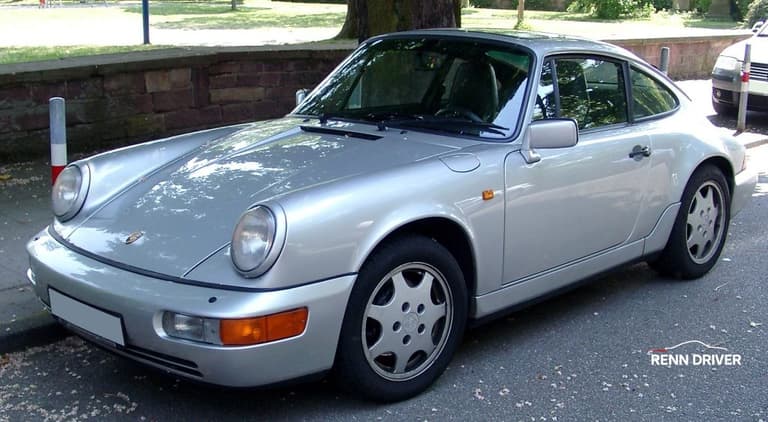
The 964 Turbo 3.3 was the model that launched the range in 1990. Its 3.3-liter single-turbo flat-six produced 320 PS (235 kW), enough to push the car to roughly 167 mph and through the quarter mile in the low 13-second range, numbers that put it among the fastest cars on sale at the time.
This was the standard Turbo, and it is the one most buyers will encounter, with around 3,660 examples produced across its short run. It keeps more of the old 930 character than the later car: noticeable lag, then a hard rush of boost once the turbocharger wakes up past 3,000 rpm. Porsche later offered the X88 Powerkit option that lifted output to 355 PS for owners who wanted more, an upgrade that is highly prized today.
964 Turbo 3.6: The One Everyone Wants
In 1993, Porsche introduced the 964 Turbo 3.6, a powerful evolution built around the larger 3.6-liter flat-six that delivered 360 PS (265 kW) and 520 Nm of torque. This turbo variant was produced in limited numbers, only about 1,437 units worldwide, which makes it one of the rarest and most desirable 911s ever built.
The 3.6 added a larger K-27 turbocharger, an upgraded intercooler, and revised electronics. The result was a clear increase in performance, a smoother boost curve, and a car that felt more refined while still ready to compete with the best of its generation. Visually, the 3.6 is identifiable by its body-colored Cup-style wheels and subtle detail changes over the standard 3.3.
Collectors hunt these cars relentlessly. Color plays a major role in value too, with paint-to-sample shades or special factory options like the X88 Powerkit or Turbo S bodywork making these cars even more sought after.
964 Turbo 3.3 vs 3.6: Which to Buy
The choice between the two comes down to budget and intent. The standard 3.3 is the more affordable way into a 964 Turbo, it carries more of the raw 930 feel, and its larger production run means more cars to choose from when you start scanning a listing or two. The 3.6 is the grail: rarer, faster, and the final, most developed air-cooled 911 Turbo before the twin-turbo 993 arrived.
If you want the purest old-school turbo experience and a lower entry price, the 3.3 makes sense. If you want the ultimate single-turbo 964 and you can absorb the increase in cost, the 3.6 is the one. Either way, this is a car where condition, documentation, and originality matter far more than chasing the cheapest example on the market.
| 964 Turbo 3.3 | 964 Turbo 3.6 | |
|---|---|---|
| Years | 1990–1992 | 1993–1994 |
| Power | 320 PS (235 kW) | 360 PS (265 kW) |
| Produced | ~3,660 | ~1,437 |
| Character | Closer to the 930 | More refined, more power |
Special Editions: Turbo S, X88, Leichtbau
Beyond the standard cars, Porsche built a handful of special versions that now sit at the very top of the market. The 964 Turbo S Leichtbau was a stripped, lightweight homologation special: roughly 86 were produced, fitted with racing seats, minimal trim, and a tuned 3.3 engine making around 381 PS. The slant-nose Turbo S Package added the flat front bodywork inspired by Porsche’s race cars.
The X88 Powerkit was a factory engine option rather than a separate model, lifting the 3.3 to 355 PS, and cars optioned this way command a premium today. Together these special editions explain why 964 Turbo values cover such a wide range, from the standard 3.3 to seven-figure Leichtbau cars.
Driving Experience + Engine Tech
A stock 964 Turbo feels heavy by modern standards but brutally fast. There is still lag, this is a single-turbo engine, but boost arrives hard past 3,200 rpm, making the car surge toward its top speed. That performance put it firmly among the fastest cars of its era, competing with Ferraris and Lamborghinis at the time. The 5-speed G50 gearbox is robust, mechanical, and direct.
Handling was developed to be more predictable than the 930, thanks to the 964 platform’s power steering and revised suspension geometry. That said, it remains a classic rear-engine 911 Turbo at heart: throttle on to plant the nose, throttle off at your own risk.
The power gains of the 3.6 came from updated internals, a bigger intercooler, and improved oil circulation. This engineering base fed directly into Porsche’s 1990s motorsport effort, with the air-cooled turbo flat-six lineage going on to underpin the fearsome 911 GT2 racers later in the decade.
What to Look For When Buying
Buying a 964 Turbo is as much about the paperwork as the car. Because values have climbed so far, you want a complete history file: service records, matching numbers, and evidence of any restoration work. A clean listing with a thin file is a red flag, no matter how good the photos look.
Check for accident repairs around the wide rear arches, confirm the originality of the engine and gearbox, and budget for air-cooled Porsche maintenance, which is not cheap. Many cars were modified by RUF, Gemballa, or Strosek when they were sold new, so decide up front whether you want a period-tuned car or a stock example. The right standard 3.3 with strong documentation will almost always be a safer buy than a cheaper car with unanswered questions.
Market Trends & Collectibility
Once overlooked as too modern, the 964 has become one of the collector market’s clearest success stories. Today it is recognized as the perfect bridge: classic looks, modern usability, and limited production. The Turbo sits at the sharp end of that appreciation.
Values break down roughly as follows:
| Model | Price Range (USD) |
|---|---|
| 964 Turbo 3.3 | $140k–$250k |
| 964 Turbo 3.6 | $300k–$450k |
| Turbo S Leichtbau | $1M+ |
Values trend higher for original, low-mileage cars with documentation. Porsche’s decision to limit production has only added to each car’s rarity and long-term appeal, and factory aero kits or rare series cars command a further premium when they reach the market.
Fun Facts
- Porsche built only around 86 Turbo S Leichtbau cars, stripped for weight and intended to compete on track. These featured a lightweight interior with racing seats and minimal trim, making them true homologation specials.
- A 964 Turbo starred in Bad Boys (1995), cementing its place in 1990s pop culture.
- The air-cooled turbo flat-six lineage fed into Porsche’s GT racing program later in the decade.
- Many cars were modified by RUF, Gemballa, or Strosek during the years they were sold through dealers.
- The 964 Turbo was the last hand-assembled 911 Turbo before modernized production methods took over.
Frequently Asked Questions (FAQs)
Why is the 964 Turbo 3.6 more expensive than the 3.3?
Because it is rarer, more powerful at 360 PS, and the ultimate single-turbo air-cooled version.
Was a Tiptronic ever available?
No. While the Carrera line could be equipped with Tiptronic, every 964 Turbo was manual-only.
How does it compare to its successor?
The 993 Turbo introduced twin-turbos and all-wheel drive with more comfort, but many enthusiasts prefer the raw edge of the single-turbo 964.
How many were produced?
Roughly 3,660 Turbo 3.3s and about 1,437 Turbo 3.6s were built.
Conclusion
The Porsche 964 Turbo is no longer the overlooked middle child of the air-cooled family. Today it stands as one of the most collectible and exhilarating 911s you can buy: modern enough to drive, raw enough to respect. Whether you chase a standard 3.3 for that classic 930-like punch or go all-in on a 3.6 grail car, this Porsche icon represents everything that made the 911 Turbo great in the 1990s.
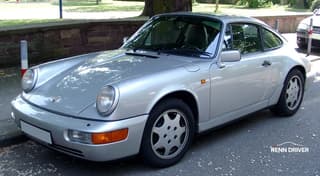
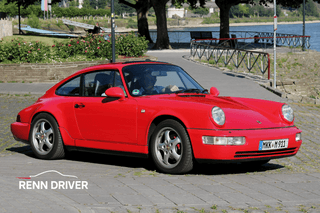
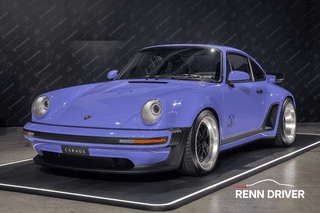
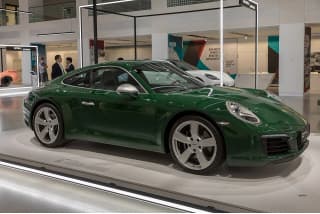
Images: Porsche 911 (964) Turbo 3.6 by nakhon100, CC BY 2.0. Porsche 911 (964) Turbo by nakhon100, CC BY 2.0. Porsche 964 front by Rudolf Stricker, CC BY-SA 3.0. Via Wikimedia Commons.