The Porsche 962 is the twin-turbo prototype that dominated sports car racing in the 1980s. It won the 24 Hours of Le Mans in 1986 and 1987 for the factory, took countless wins for privateer teams, and a road-derived version won Le Mans again in 1994. Porsche built 91 of them, and it remains the most successful endurance racing car the company ever made.
Here is everything you need to know about the Porsche 962.
Contents
What Is the Porsche 962
The Porsche 962 is a closed-cockpit racing prototype that Porsche built from 1984 to 1991. It was the tool Porsche used to win endurance races on both sides of the Atlantic, in the American IMSA GTP series and the European and world Group C championships. For most of the decade it was simply the car to beat.
The 962 arrived as a longer, safer evolution of the all-conquering 956. It kept that car’s aluminum monocoque and ground-effect floor, but stretched the wheelbase to clear American safety rules. That one change opened up the United States market and turned a European champion into a global one.
Why the 962 Stands Apart
What makes the 962 special is not one headline number. It is the sheer scale of its success. The car took 19 constructor titles across various series, won Le Mans three times, and kept winning in privateer hands years after the factory had moved on.
Few race cars have ever stayed competitive for as long. A design penned in 1984 was still taking championship wins a decade later. That kind of staying power is almost unheard of at the top level of motorsport, where most cars are obsolete within two seasons.
Where It Sits in the Bloodline
The 962 marks the high point of a bloodline that runs back to the 917 and forward to the 911 GT1. The 917 made Porsche a Le Mans winner; the 962 made Porsche the Le Mans winner. The GT1 carried the same customer-and-factory model into the 1990s.
If you want to understand why Porsche is the most successful name in sports car racing, the 962 is where the story peaks. No other manufacturer has matched its combination of factory wins, customer wins, and outright longevity in a single design.
From the 956: Variants and Engine
The 962 began as a fix for a rules problem. To understand the car, you have to understand the 956 it grew out of and the regulations that forced the change.
The 956 Rules Problem
The 956 was a brilliant ground-effect prototype that dominated Group C racing in Europe from 1982. It won Le Mans four years running. The trouble was the American IMSA series banned it on safety grounds, because the driver’s feet sat ahead of the front axle.
Porsche’s answer was simple and effective. Engineers stretched the wheelbase and pushed the front wheels forward, ahead of the pedal box, so the driver’s feet sat behind the front axle line. That single change satisfied the IMSA rule book and created the 962. Everything else, including the aluminum monocoque chassis and the ground-effect underbody, carried over from the proven 956. Like the 956, it kept a rear-mid-engine layout, with the turbocharged flat-six mounted behind the driver and ahead of the rear axle.
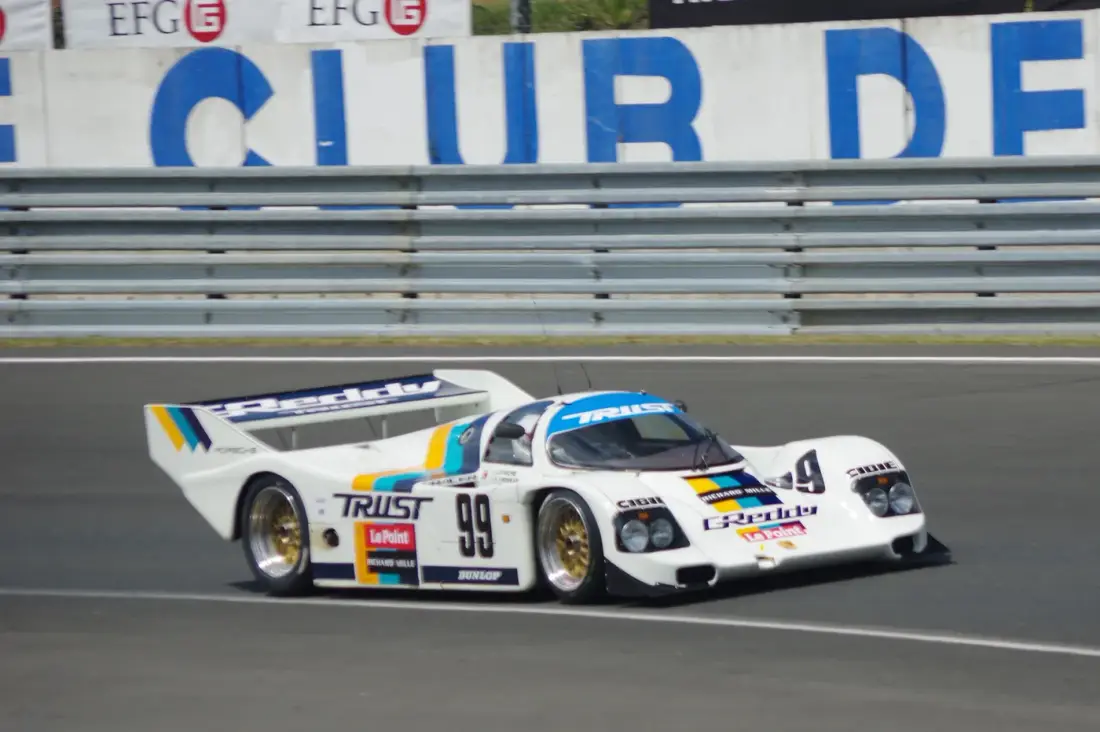
The result was a car that kept the 956’s strengths while opening the door to the lucrative American market. Within a year the 962 was winning on both continents, and Porsche had a single platform it could sell to customer teams worldwide.
962 vs 962C
There were two main versions, and the naming trips people up. The plain “962” was the IMSA GTP car for the United States. The Porsche 962C was the Group C version for the World Sportscar Championship and Le Mans. The C stands for the Group C category, not for any feature on the car.
The differences came down to the engine and the rules each series ran. IMSA initially required a single turbocharger and an air-cooled engine, while Group C allowed twin turbos and, later, water-cooled cylinder heads. The chassis and bodywork were broadly shared, so a team could campaign the same basic car in either championship with the right engine fitted.
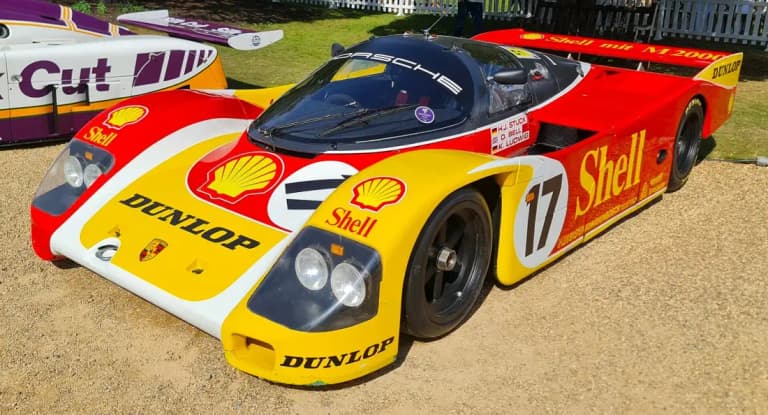
This shared platform is a big part of why the 962 spread so far. A team in Japan, Germany or the United States could buy one car and adapt it to local rules. That flexibility kept the 962 relevant across more series than any single rival could chase.
Engine and Power
The heart of the 962 is a turbocharged flat-six derived from the Type 935 racing engine, designed under Hans Mezger. This is the same engineering lineage that later produced the legendary road-car Mezger engines in the GT3 and Turbo. The racing version is where it was forged.
The American IMSA cars started with a 2.8L air-cooled single-turbo unit. From 1985 Porsche offered a larger 3.2L version for IMSA. The Group C 962C ran twin-turbo engines in 2.6L, 3.0L, and 3.2L forms, and from 1988 switched to water-cooled cylinder heads for better reliability and cooling under sustained load.
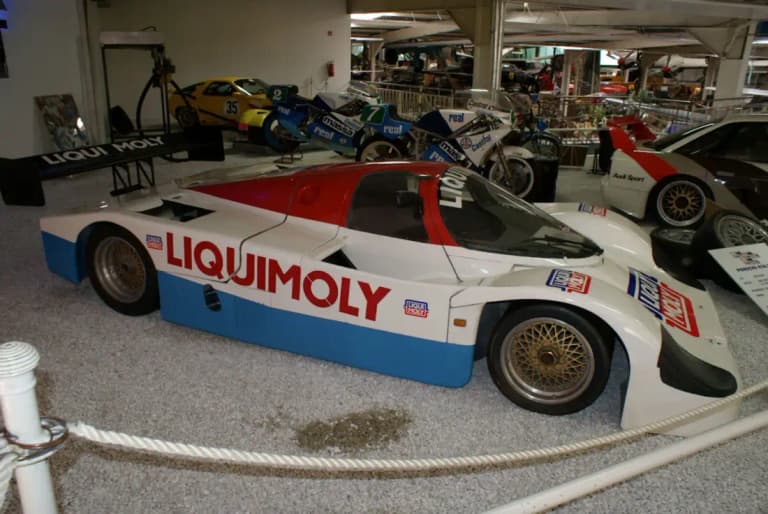
Power depended on boost and tune, but a race 962 typically made between 620 and 700 horsepower, with qualifying settings pushing well beyond that. The flat-six’s compact size and low center of gravity helped the car’s balance, something drivers praised throughout its career. It is one of the great racing applications of Porsche’s flat-six engine.
Chassis, Aero and Handling
Under the skin the 962 was a masterclass in ground effect. Shaped tunnels in the floor sucked the car down onto the road, generating huge downforce without the drag of a tall wing. That let the 962 hold high speed through long corners while still running a slippery body for the straights.
The early aluminum monocoque chassis was strong but flexed under the loads of modern slicks. Later cars and several privateers moved to stiffer aluminum honeycomb or carbon construction to sharpen the handling. Porsche’s race engineer Norbert Singer kept refining the aero package year by year, chasing aerodynamic efficiency to claw back the speed that new chicanes and rule changes took away.
Drivers describe the 962 as fast but demanding. The turbo lag of the era meant you had to think ahead with the throttle, and the downforce only worked above a certain speed. Get it right, and few cars of the 1980s could touch it through a quick sequence of corners.
The Racing Record
The 962’s results read like a highlight reel of 1980s endurance racing. Across every major series it entered, the car won, and kept winning long after most rivals had been retired.
The Le Mans Wins
The factory 962C won the 24 Hours of Le Mans in 1986 and 1987, with a driver roster that included Derek Bell, Al Holbert, and Hans-Joachim Stuck. You can trace those wins in Porsche’s own motorsport history. A third Le Mans win followed in 1994 with the road-derived Dauer car, covered further down.
On the long Mulsanne Straight the 962C had a top speed that could nudge 230 mph before chicanes were added in 1990 to slow the prototypes. Sustaining that for 24 hours, lap after lap, is what separated the 962 from cars that were merely fast over a single qualifying run.
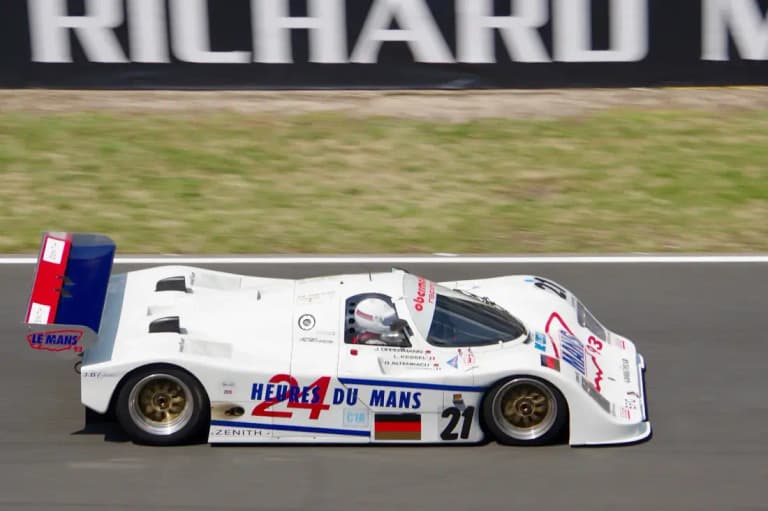
Le Mans rewards reliability as much as pace, and the 962 had both. Group C ran to strict fuel-economy rules, and the 962’s turbocharged flat-six could be turned down to manage fuel consumption and parts through the night, then turned back up when the team needed to chase a rival. That tunability is a quiet reason behind so many of its wins.
Championships on Two Continents
The 962 took the World Sportscar Championship in 1985 and 1986, and dominated the IMSA GT Championship from 1985 through 1988. Wins at the Daytona 24 Hours, the 12 Hours of Sebring and Road America filled out a record few cars can match, often against works efforts from Jaguar, Nissan and Toyota. Across all series the 962 family collected 19 constructor titles.
Winning on two continents at once is the part that still stands out. The same basic car beat the best of Europe in Group C and the best of America in IMSA, often in the same season. No other prototype of the era spread its success so wide.
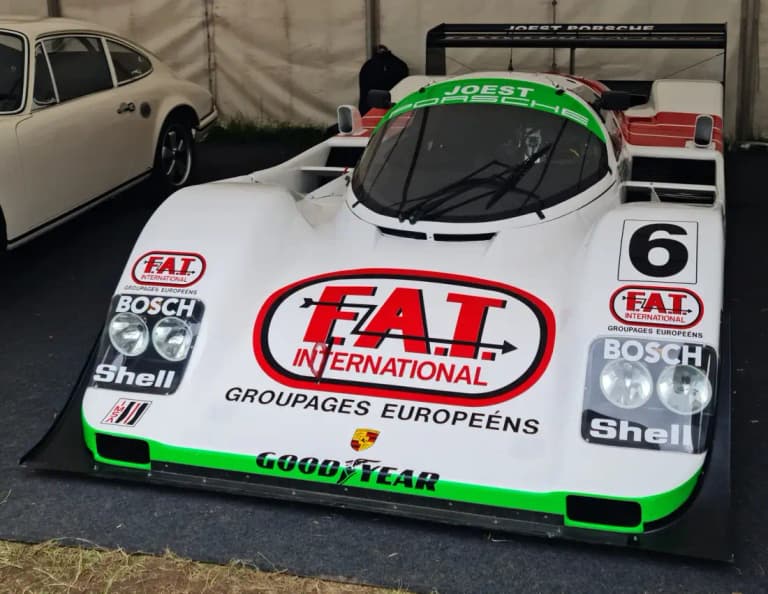
Japan was the third front. The All Japan Sports Prototype Championship was full of 962s through the late 1980s, and Japanese teams developed some of the most extreme versions of the car. By the end of the decade the 962 had won on three continents.
A Decade of Longevity
What stands out most is the longevity. Privateer 962s were still winning races into the early 1990s, and a Team Taisan car took an All Japan Grand Touring title in 1994. That is a decade of competitive life for a single design, which is almost unheard of in top-level racing.
Most race cars get one or two strong seasons before the rules or the rivals move on. The 962 stayed relevant because the chassis was good enough to keep developing and because so many clever teams kept pouring effort into it.
The Privateer Era
Porsche did something unusual with the 962, and it shaped the entire decade of racing that followed.
The Customer Car That Filled the Grid
Porsche sold the 962 to customers, and lots of them. Of the 91 built, 75 went to private owners and customer teams. That decision is why the 962 appeared in so many different liveries and won so many races the factory never entered. On a given weekend the grid could hold a dozen of them.
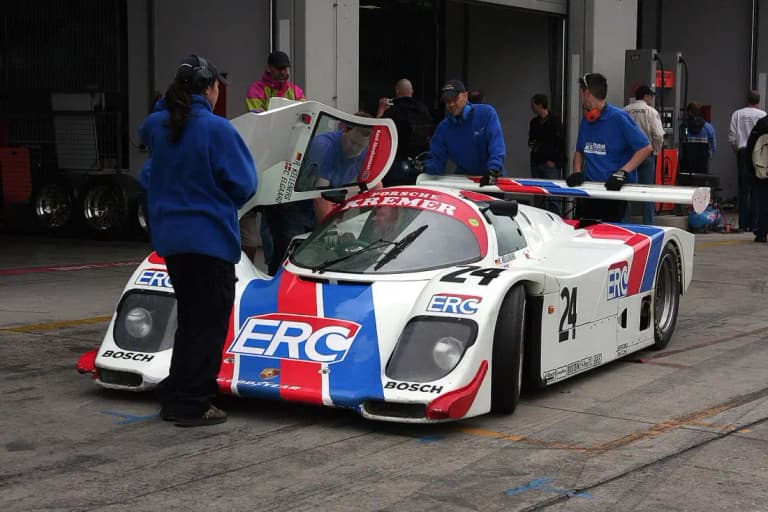
Selling a front-running prototype to anyone with the money was rare then and is almost unthinkable now. It meant Porsche earned revenue from the program, gathered data from dozens of cars, and kept its name on the top step even when the works team stayed home.
Joest, Kremer, Brun and Lloyd
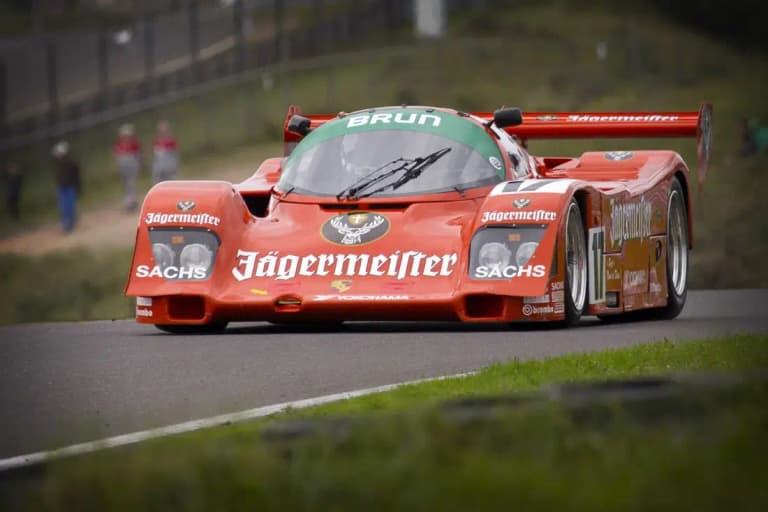
Several teams went further and built their own chassis around Porsche running gear. Joest Racing campaigned heavily modified 962s for years and ran the famous F.A.T. cars. Al Holbert’s Holbert Racing ran the dominant IMSA program in the United States, while Kremer Racing built the 962CK with a carbon fiber chassis. Brun Motorsport ran its own design and finished second in the 1987 World Sportscar Championship.
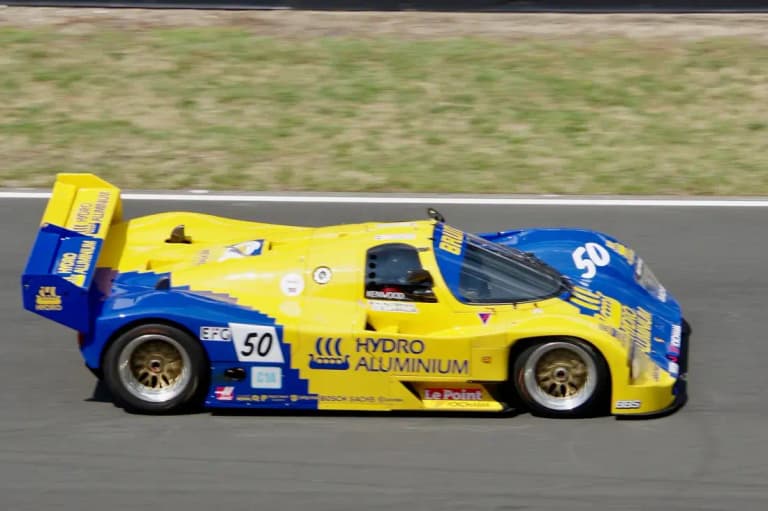
Richard Lloyd Racing developed an aluminum honeycomb tub with revised aerodynamics that many rate as the best-handling 962 of all. This army of privateers turned the 962 into the backbone of an entire racing era, and it is a big reason the car is so loved by fans today.
The Road-Going 962s
Because so many 962s existed, several companies turned them into road cars. The results ranged from rough conversions to one of the cleverest Le Mans winners of all time.
Schuppan, Koenig and DP
The Schuppan 962CR was a fully reworked street version with new bodywork, priced around £830,000 when new. Koenig and DP Motorsport built their own small runs of road-legal conversions. None were comfortable in any normal sense, but they let a handful of very rich buyers drive a Le Mans car to dinner.
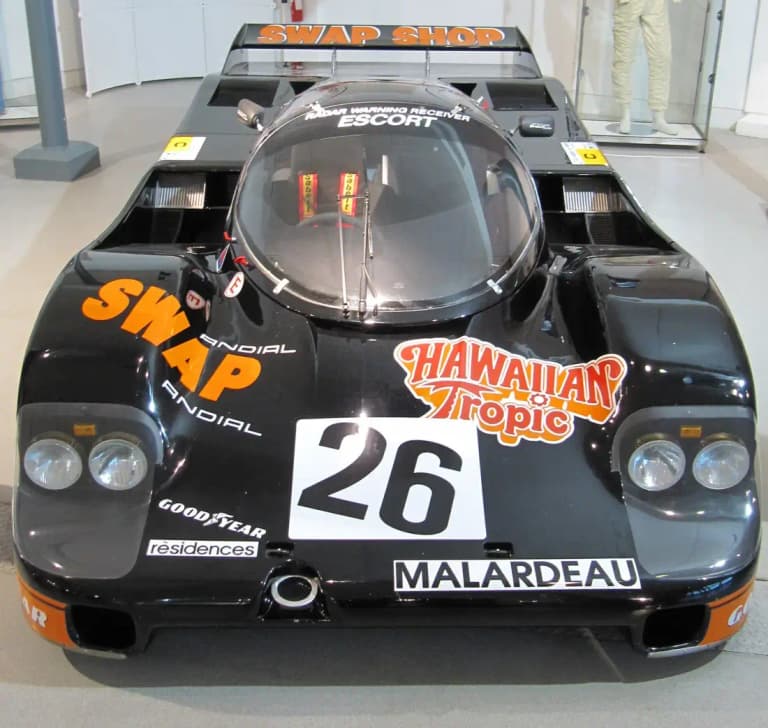
These conversions are footnotes next to the race cars, but they show how desirable the 962 already was in period. Owning one was a statement, even if the air conditioning was an afterthought and the cabin was still mostly bare carbon and switches.
The Dauer 962 Le Mans Loophole
The most famous road-going 962 is the Dauer 962 Le Mans. Jochen Dauer turned the race car into a road-legal supercar, and Porsche spotted a loophole. Because it was technically a production road car, it could race at Le Mans in the GT category rather than against the prototypes.
In 1994 the Dauer 962 Le Mans won the 24 Hours outright, giving the 962 its third Le Mans victory ten years after its debut. A car designed in 1984 beat purpose-built prototypes a decade later, simply because someone read the rules carefully.
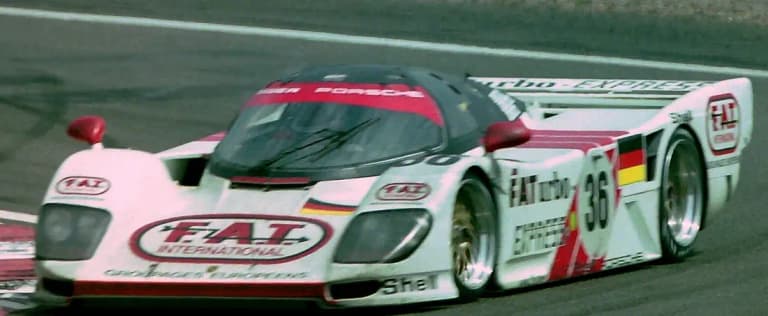
That win is a fitting final chapter for a car defined by adapting to regulations. The 962 was born to satisfy a rule book in America, and it bowed out by outsmarting one in France. Few cars have a story so neatly bookended.
Value and Legacy
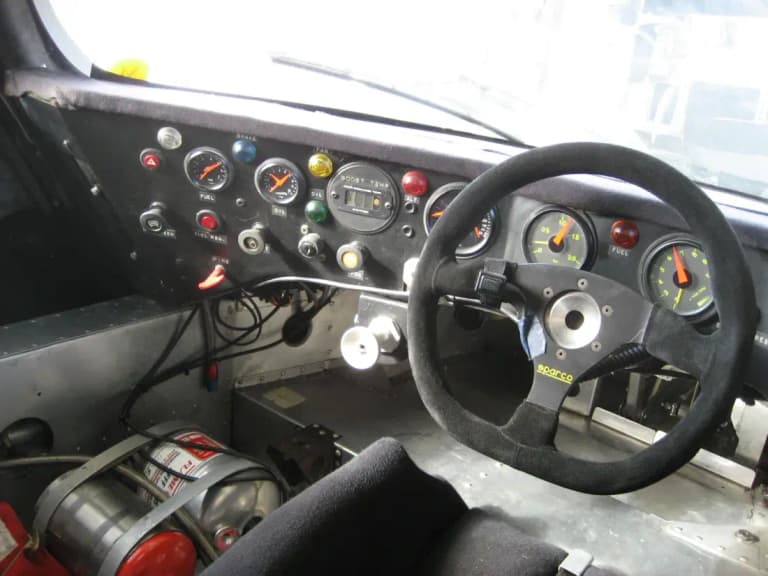
The cockpit of a 962 tells you what kind of car it is. It is all business, with a small wheel, a bank of switches, and almost nothing for comfort. This was a tool built to win 24 hour races, not to pamper a driver.
What a 962 Is Worth Today
Today the 962 is a blue-chip collector car. Genuine examples with real race history trade between roughly $1 million and $4 million, and cars with Le Mans provenance or iconic liveries sit at the top of that range. They feature in our guide to the most valuable Porsche models.
Provenance is everything with these cars. A chassis that won a major race, or wore a famous livery like Rothmans or Jägermeister, can be worth several times a sister car with a quieter history. Buyers pay for the story as much as the metal.
The Lasting Legacy
The legacy runs deeper than money. The 962 proved Porsche’s customer-racing model worked, kept the Mezger engine lineage alive, and set the template for the GT1 that followed. When people call Porsche the king of Le Mans, the 962 is a large part of the reason.
Its influence is still visible in how Porsche sells customer race cars today, from the 911 RSR to the current LMDh program. The idea that a factory can win and also put a winning car in private hands started in earnest with the 962. For the road-going side of that bloodline, see our 911 guide.
Frequently Asked Questions
How many Porsche 962s were built?
Porsche built 91 examples between 1984 and 1991, 16 for the factory and 75 for customer teams. A handful of 956s were also rebuilt as 962s, which is why chassis records vary slightly.
What is the difference between the Porsche 956 and 962?
The 962 is a longer-wheelbase 956. Porsche moved the front axle ahead of the driver’s feet to meet IMSA safety rules in the United States. The two cars share the same basic design and ground-effect floor.
What engine does the Porsche 962 use?
A turbocharged flat-six derived from the Type 935 racing engine designed under Hans Mezger. Early IMSA cars used a single-turbo air-cooled 2.8L unit; Group C 962C cars used twin-turbo 2.6L to 3.2L versions, later with water-cooled cylinder heads.
Did the Porsche 962 win Le Mans?
Yes. The factory 962C won the 24 Hours of Le Mans in 1986 and 1987. A road-derived Dauer 962 Le Mans won again in 1994, ten years after the car first raced.
How fast was the Porsche 962?
A Group C 962C could top 230 mph on the Mulsanne Straight at Le Mans before chicanes were added in 1990. With 620 to 700 horsepower and a kerb weight near 850 kg, it was savagely quick for its era.
How much is a Porsche 962 worth?
Genuine factory and historic privateer 962s trade between roughly $1 million and $4 million depending on race history. Cars with Le Mans provenance or famous liveries command the most.
Images: Hero (Brun Jägermeister 962C) by Chris Peeters, CC0; Trust 962C by David Merrett, CC BY 2.0; Shell Dunlop 962C by MrWalkr, CC BY-SA 4.0; Liquimoly 962C by Valder137, CC BY 2.0; Le Mans Classic 962C by David Merrett, CC BY 2.0; Joest 962C by MrWalkr, CC BY-SA 4.0; Kremer 962 by Lothar Spurzem, CC BY-SA 2.0 DE; Hydro Aluminium Brun 962C by David Merrett, CC BY 2.0; Swap Shop 962 by kitmasterbloke, CC BY 2.0; Dauer 962 Le Mans by Martin Lee, CC BY-SA 2.0; Cockpit by The359, CC BY-SA 4.0. Via Wikimedia Commons.