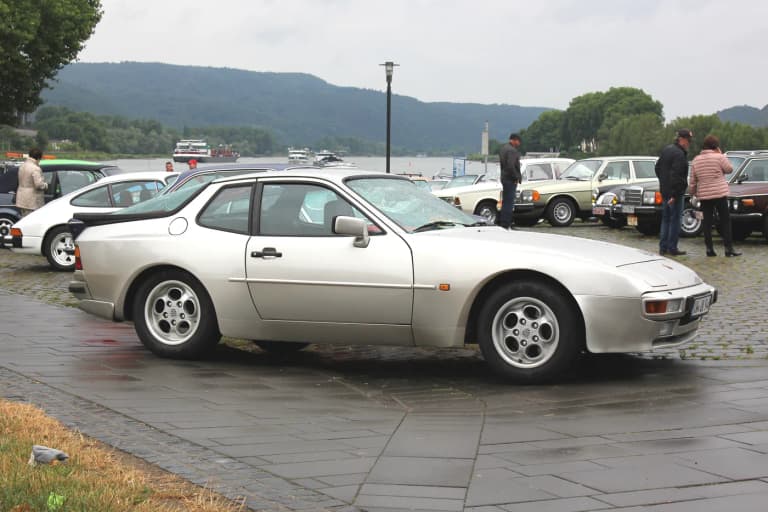
The Porsche 944 was the most successful transaxle Porsche, built from 1982 to 1991. It used a four-cylinder engine derived from half of the 928 V8, smoothed by twin balance shafts, mounted at the front with a rear transaxle for near-perfect balance. The range ran from the base 944 up to the 250-horsepower 944 Turbo S and the 3.0-liter 944 S2, and it remains one of the best-value classic Porsches.
In this article, we’ll explain the Porsche 944, Porsche’s best-selling front-engine transaxle sports car. We’ll cover its balance-shaft engine, the 944 Turbo, the 944 S2, and current values.
Contents
What Is the Porsche 944
The Porsche 944 was the car that took the front-engine, transaxle idea introduced by the 924 and made it genuinely desirable. Where the 924 was an affordable entry point built largely from Volkswagen and Audi parts, the 944 used a proper Porsche-designed engine and wide, muscular bodywork.
It became the best-selling sports car in Porsche’s history up to that point, with more than 160,000 built across all variants. For a generation of buyers in the 1980s, the 944 was the realistic, attainable Porsche, and it earned a reputation as one of the best-handling cars of its era.
Today the 944 is one of the smartest ways into classic Porsche ownership. It offers genuine Porsche engineering, excellent balance, and strong parts support, all at prices well below an air-cooled 911.
From 924 to 944
The 944 arrived in 1982 to replace the 924 as Porsche’s mainstream entry-level sports car, though the 924 carried on for a few more years as a cheaper option. Visually the 944 took the aggressive wide-arch look of the rare 924 Carrera GT and applied it to a mass-production car.
The big change was under the bonnet. Rather than the Audi-derived engine of the early 924, the 944 used an all-new Porsche four-cylinder. This single change transformed the car’s character and silenced much of the snobbery that had dogged the 924.
The Balance-Shaft Engine
The 944’s engine was, in effect, one cylinder bank of the 928 V8 turned into a 2.5-liter four-cylinder. Large four-cylinder engines tend to vibrate badly, so Porsche fitted twin counter-rotating balance shafts to cancel out the shaking. The technology was licensed from Mitsubishi, who had refined a much older idea.
The result was a big, torquey four-cylinder that was unusually smooth for its size. It gave the 944 strong real-world performance and a distinctive character, and the balance-shaft layout became a defining feature of the car.
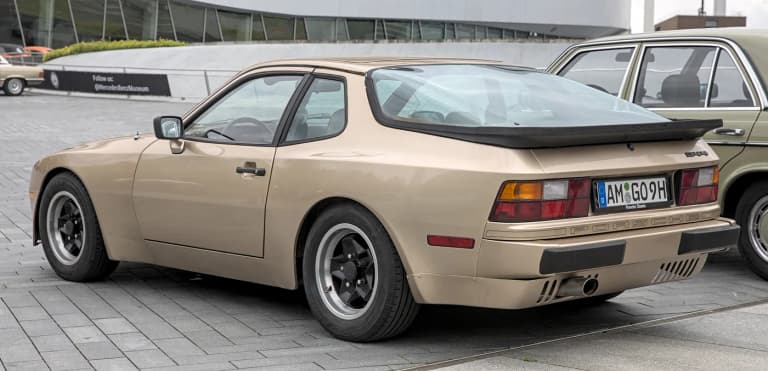
The 944 Range: Base, S, Turbo, S2
The original 944 produced around 150 horsepower from its 2.5-liter engine. It was never about outright speed, but the combination of usable torque, light weight, and superb balance made it quick across real roads and hugely satisfying to drive.
In 1986 Porsche added the 944 S, which used a 16-valve cylinder head to lift power and raise the rev limit. The S brought a sharper, more eager character to the naturally aspirated car and bridged the gap to the later 3.0-liter cars.
The 944 Turbo
The 944 Turbo, known internally as the 951, arrived in 1985 and turned the 944 into a serious performance car. A turbocharged and intercooled version of the 2.5-liter engine produced around 220 horsepower, later rising to 250 horsepower in the 944 Turbo S.
The Turbo was notable for how cleanly it delivered its power. Where the earlier 911 Turbo of the era was famously laggy and intimidating, the 944 Turbo was progressive and confidence-inspiring, with the transaxle balance keeping it stable and predictable. Many consider it one of the best-handling Porsches of the 1980s.
The 944 S2 and Cabriolet
In 1989 Porsche introduced the 944 S2, powered by a 3.0-liter version of the 16-valve engine producing around 211 horsepower. At the time it was the largest production four-cylinder engine in the world, and it gave the naturally aspirated 944 strong, flexible performance without the complexity of a turbo.
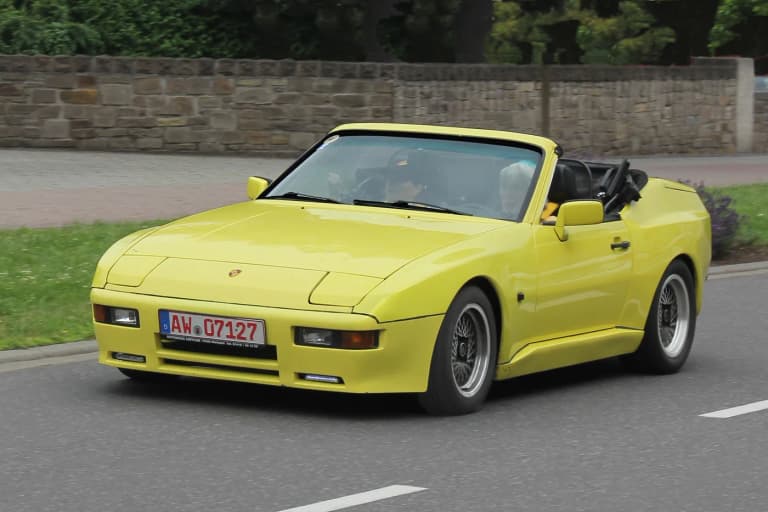
The S2 was also offered as a cabriolet, adding open-top appeal to the range for the first time. The S2 is often seen as the most complete naturally aspirated 944: powerful, smooth, and well sorted after years of development. It set the stage for the 944’s replacement, the heavily revised 968.
Driving Character
The 944’s defining quality is balance. The front-engine, rear-transaxle layout gives it near-equal weight distribution, and the result is steering and handling that feel natural and trustworthy. It is a car that flatters the driver rather than catching them out.
It is not a car defined by big horsepower, except in Turbo form. The reward comes from carrying speed through corners, using the torque, and enjoying the precision of the controls. For drivers who value handling over straight-line drama, the 944 is one of the most satisfying classics Porsche has made.
Values and Ownership
The 944 remains an accessible classic, though the Turbo and S2 have appreciated significantly as buyers have recognized their quality.
| Variant | Condition | Approx. Value |
|---|---|---|
| 944 (2.5) | Good driver | $10,000 to $22,000 |
| 944 S | Good to excellent | $15,000 to $30,000 |
| 944 S2 / Cabriolet | Good to excellent | $20,000 to $45,000 |
| 944 Turbo / Turbo S | Excellent | $35,000 to $80,000 |
Mechanically the 944 is robust, but two service items dominate ownership. The timing belt and balance-shaft belts must be replaced on schedule, because a failure can destroy the engine. Beyond that, look for rust in the usual places, tired interiors, and worn suspension. A well-maintained car with belt history is the one to buy. Figures are 2026 estimates.
Frequently Asked Questions
What engine does the Porsche 944 use?
The 944 uses a front-mounted four-cylinder engine derived from one bank of the 928 V8. It started at 2.5 liters and grew to 3.0 liters in the S2. Twin counter-rotating balance shafts cancel the vibration that large four-cylinder engines normally produce, making it unusually smooth.
What is the difference between the 944 and the 944 Turbo?
The standard 944 is naturally aspirated, producing around 150 to 211 horsepower depending on the version. The 944 Turbo, known as the 951, adds a turbocharger and intercooler for 220 to 250 horsepower and significantly stronger performance, with notably smooth and predictable power delivery.
Is the Porsche 944 a good first Porsche?
Yes. The 944 is one of the best-value entry points into classic Porsche ownership. It offers genuine Porsche engineering, excellent handling balance, and strong parts support at prices well below an air-cooled 911. A well-maintained example with documented belt service is a smart buy.
How much is a Porsche 944 worth?
Base 944s trade between roughly $10,000 and $22,000, the 944 S and S2 between $15,000 and $45,000, and the 944 Turbo from $35,000 upward. Condition and timing-belt history matter more than mileage, since belt failure can destroy the engine.
What is the most important thing to check on a 944?
The timing belt and balance-shaft belts are the critical items. If they fail, the engine can suffer catastrophic damage, so documented belt-replacement history is essential. After that, check for rust, worn suspension, and a tired interior.
What replaced the Porsche 944?
The 968 replaced the 944 in 1992. It was a heavily revised evolution of the same transaxle platform, using a 3.0-liter engine with VarioCam variable valve timing and updated styling. Porsche considered the changes extensive enough to justify a new model name.
Images: Hero 944 coupe and 944 cabriolet by Lothar Spurzem, CC BY-SA 2.0 DE. 944 coupe by Alexander Migl, CC BY-SA 4.0. Via Wikimedia Commons. Value figures are 2026 market estimates.