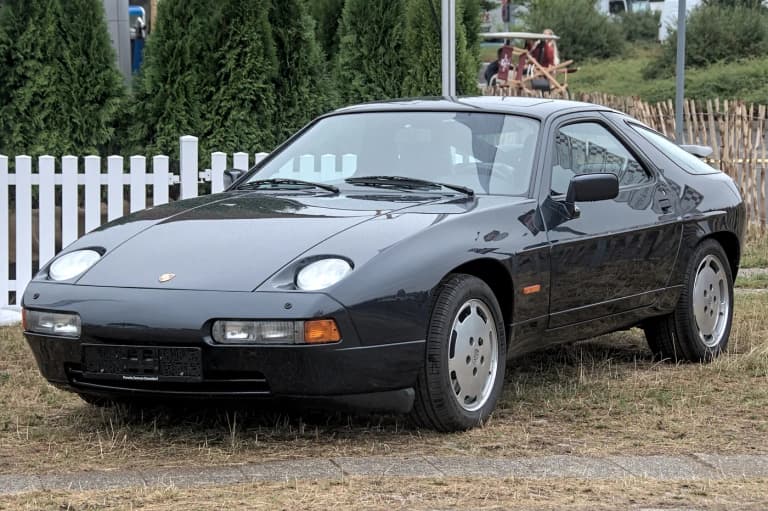
The Porsche 928 was a front-engine, water-cooled V8 grand tourer built from 1977 to 1995. Porsche designed it to eventually replace the 911, and it became the first sports car to win the European Car of the Year award. It evolved from a 4.5-liter, 240-horsepower original into the 5.4-liter, 345-horsepower 928 GTS, and it remains one of the most usable and undervalued classic Porsches.
Here is everything you need to know about the Porsche 928.
Contents
What Is the Porsche 928
The Porsche 928 was Porsche’s flagship grand tourer for nearly two decades. Unlike the rear-engined, air-cooled 911, the 928 used a large water-cooled V8 mounted at the front, driving the rear wheels through a transaxle. It was a luxurious, fast, long-distance machine rather than a stripped-out sports car.
It was also one of Porsche’s boldest gambles. The company developed the 928 in the 1970s believing that tightening safety and emissions rules might eventually kill the rear-engine 911. The 928 was meant to be the modern, civilized car that would carry Porsche into the future.
History had other plans. The 911 survived and thrived, and the 928 settled into the role of a grand tourer alongside it rather than as its replacement. It stayed in production until 1995 and remains a distinctive, technically advanced classic.
The Car Meant to Replace the 911
When the 928 arrived as a 1978 model, it was unlike any previous Porsche. It immediately won the European Car of the Year award, the first and only time a sports car has taken that title. The judges recognized its blend of performance, refinement, and engineering ambition.
The plan to replace the 911 never materialized. Buyers loved the 911 too much, and the 928 was always far more expensive to build and buy. Rather than one car succeeding the other, Porsche ended up selling both side by side, with the 928 as the upmarket grand tourer and the 911 as the focused sports car.
The V8 and Transaxle Layout
The 928 used the same transaxle principle as the smaller 924, 944, and later 968, with the engine at the front and the gearbox at the rear for balanced weight distribution. The difference was the engine: a bespoke Porsche V8 rather than a four-cylinder.
The original 4.5-liter V8 produced 240 horsepower in European trim. Over the years the engine grew in capacity and sophistication, gaining more valves and more power with each major revision. The 928 also introduced the clever “Weissach axle,” a rear suspension design that passively countered lift-off oversteer for safer, more stable handling.
Model Range: 928 to S4 and GTS
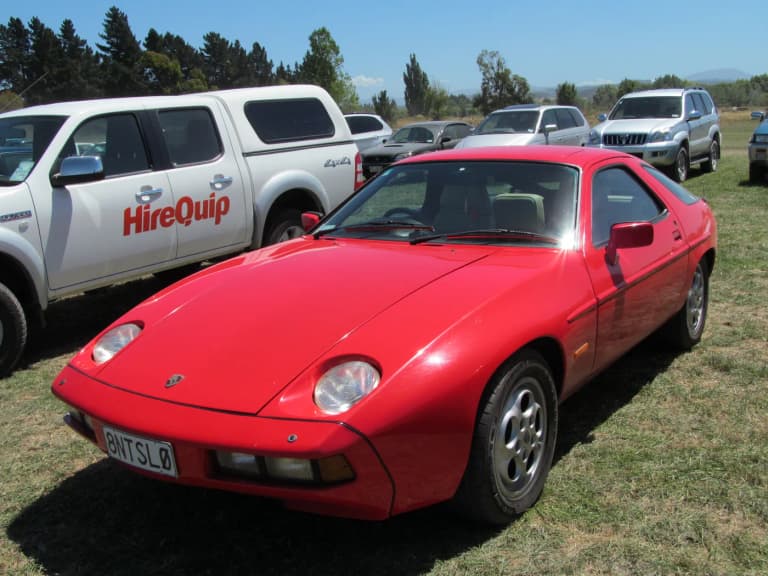
The 928 developed steadily through its life. The early cars gave way to the 928 S, which added more power and the deeper front and rear spoilers many people picture when they think of the model. Power climbed as the engine grew from 4.5 to 4.7 and then 5.0 liters.
The big technical leap came in 1987 with the 928 S4. It used a fully revised 5.0-liter, 32-valve V8 producing around 320 horsepower, along with cleaner aerodynamics and a smoother nose and tail. The S4 is the version that best balances performance, refinement, and relative affordability today.
The 928 GTS
The final and most desirable 928 is the GTS, sold from 1992 until the end of production in 1995. It used a 5.4-liter V8 producing 345 horsepower, wide flared rear arches, and distinctive body-colored trim. It was a genuinely fast car, capable of running with the supercars of its day while carrying two people in comfort.
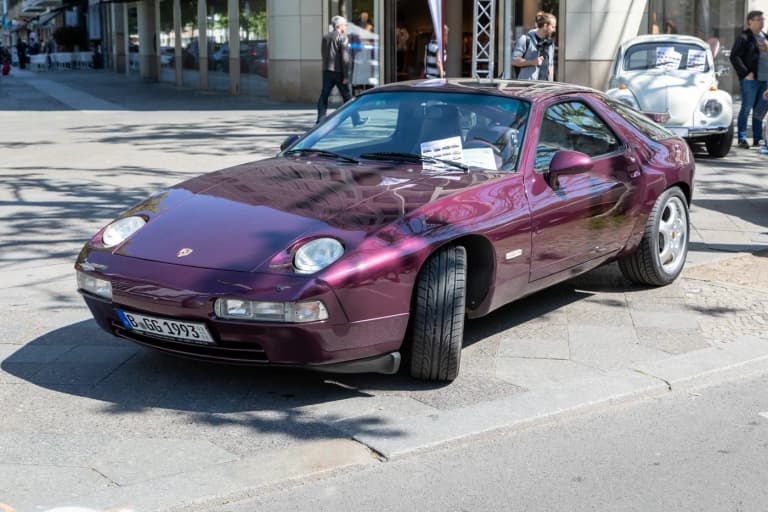
The GTS was expensive when new and sold in small numbers, which makes it rare today. Combined with its status as the ultimate 928, that rarity has pushed GTS values far above those of earlier cars. It is now firmly a collector model.
Driving Character
The 928 drives like the grand tourer it is. The V8 delivers smooth, effortless torque, the ride is comfortable, and the cabin is a relaxed place to cover big distances. This was always a car built for fast, long journeys rather than for chasing lap times.
That said, the balanced transaxle layout and the Weissach axle give it genuine handling ability. It corners with composure and stability that belie its size and weight. The character is different from a 911, more relaxed and less nervous, but no less capable in its own way.
Values, Buying, and Ownership
For years the 928 was the cheapest way into a V8 Porsche, and early cars are still attainable. Values rise sharply as you move toward the S4 and especially the GTS.
| Variant | Condition | Approx. Value |
|---|---|---|
| 928 / 928 S (early) | Good driver | $15,000 to $35,000 |
| 928 S4 | Good to excellent | $25,000 to $55,000 |
| 928 GT | Good to excellent | $45,000 to $90,000 |
| 928 GTS | Excellent | $90,000 to $200,000+ |
The smart buy is a well-maintained S4 with full service history. Early cars are cheaper but trickier to live with, and the GTS has moved into serious collector territory. As always with the 928, condition and documented maintenance matter far more than the asking price alone. Figures are 2026 estimates.
Ownership and Running Costs
The 928 is a complex, expensive car to run properly, and that is the single most important thing to understand before buying one. It is full of advanced engineering for its era, and that engineering needs specialist care.
The critical service item is the timing belt. On these V8s a snapped belt can cause catastrophic engine damage, so a documented belt history is essential. Beyond that, electrical gremlins, worn suspension components, and tired interiors are common. A cheap 928 is rarely cheap once you add up the deferred maintenance, so buy the best example you can afford and budget for upkeep.
Frequently Asked Questions
Was the Porsche 928 meant to replace the 911?
Yes. Porsche developed the 928 in the 1970s believing that safety and emissions rules might force the end of the rear-engined 911. The 911 survived, so the two cars were sold side by side, with the 928 serving as the V8 grand tourer rather than a replacement.
What engine does the Porsche 928 use?
The 928 used a series of front-mounted, water-cooled V8 engines driving the rear wheels through a transaxle. It started at 4.5 liters and 240 horsepower and grew over time to the 5.4-liter, 345-horsepower unit in the final 928 GTS.
What is the best Porsche 928 to buy?
The 928 S4 is widely seen as the sweet spot, combining strong performance, smoother styling, and relative affordability with full service support. The 928 GTS is the ultimate version but is rare and expensive. Whichever you choose, documented timing-belt history is essential.
Why did the Porsche 928 win Car of the Year?
The 928 won the 1978 European Car of the Year award for its combination of V8 performance, refinement, and advanced engineering, including its transaxle layout and Weissach rear axle. It remains the only sports car ever to win the award.
How much is a Porsche 928 worth?
Early 928 and 928 S cars trade between roughly $15,000 and $35,000, the S4 between $25,000 and $55,000, and the GTS from $90,000 upward. Condition, service history, and especially timing-belt records have a large effect on price.
Is the Porsche 928 expensive to maintain?
Yes. The 928 is a complex car with advanced engineering that requires specialist maintenance. The timing belt is the critical service item, since a failure can destroy the engine. Budget carefully for upkeep and buy the best-maintained example you can find.
Images: Hero black 928 by Alexander Migl, CC BY-SA 4.0. 928 GTS by Matti Blume, CC BY-SA 4.0. Early 928 by Riley, CC BY 2.0. Via Wikimedia Commons. Value figures are 2026 market estimates.