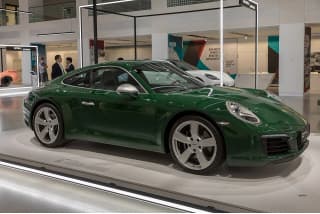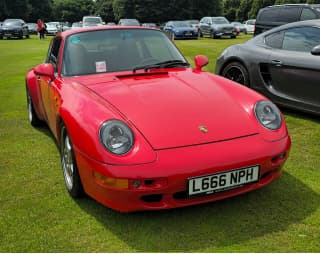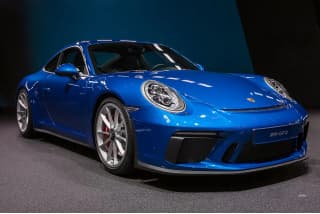
The Porsche 911 is famous for its colors as much as its shape. Guards Red is the single most associated 911 color, but the palette runs from classic air-cooled shades like Irish Green and Grand Prix White to vivid modern hues like Shark Blue and Python Green. Through Paint to Sample, you can order almost any color you want.
In this article, we’ll explore Porsche’s most recognizable 911 colors, classic and modern. We’ll cover classic colors, modern colors, Paint to Sample, and resale value.
Contents
Quick Summary
- Most Iconic Color: Guards Red, which debuted on the 930 Turbo in 1975 and remains the color most associated with the 911.
- Signature Classic Green: Irish Green, used on Porsche’s one millionth 911 in 2017.
- Standout 964/993-Era Colors: Riviera Blue and Speed Yellow, both still popular Paint to Sample requests today.
- Modern Signature Colors: Shark Blue, Miami Blue, and Python Green define the current water-cooled cars.
- Best-Selling Used Colors: White, black, and silver sell the most on the used market because they are safe resale choices.
- Paint to Sample: Porsche’s custom paint program is a five-figure option on most current 911 models; Paint to Sample Plus lets you supply your own color.
- Resale Impact: Bold or Paint to Sample colors often add value on GT and collectible cars, while neutral colors are the easier sell on ordinary used Carreras.
Why Color Matters on a 911
The 911 shape has barely changed in 60 years, so color is how owners make the car their own. A 911 in Guards Red reads very differently from the same car in Chalk or Python Green. For many buyers, the color is the first decision, not the last.
Color, Not Shape, Sets the Mood
Because the silhouette stays so consistent, paint does most of the talking. A silver Carrera looks like a quiet daily driver. The same car in Speed Yellow looks like a track toy. Porsche understands this, which is why it keeps reviving famous old shades and offers a custom paint program that can match almost anything.
You can see the brand’s own picks on the most iconic Porsche colors page. The colors below are the ones that come up again and again when enthusiasts talk about the car.
How Porsche Names Its Colors
Porsche color names are part of the appeal. Guards Red, Riviera Blue, and Python Green are easy to remember and tie a shade to a moment in the company’s history. Some names are descriptive, like Grand Prix White. Others, like Rubystone Red, are pure marketing romance.
Standard colors fall into solid, metallic, and special groups, with metallic and special shades costing more. Beyond that sits Paint to Sample, the program that opens up almost the entire spectrum.
Names also help a color survive past its production years. When fans keep asking for Riviera Blue or Speed Yellow by name, Porsche has a reason to bring them back through Paint to Sample. A memorable name keeps a shade alive long after it leaves the standard list. The rest of this guide walks through the colors that matter, era by era.
Classic Air-Cooled Colors
The air-cooled era, from the 1960s to the 1990s, set the template for what a 911 should look like. These colors are warm, simple, and instantly period correct on a classic 911.
Guards Red
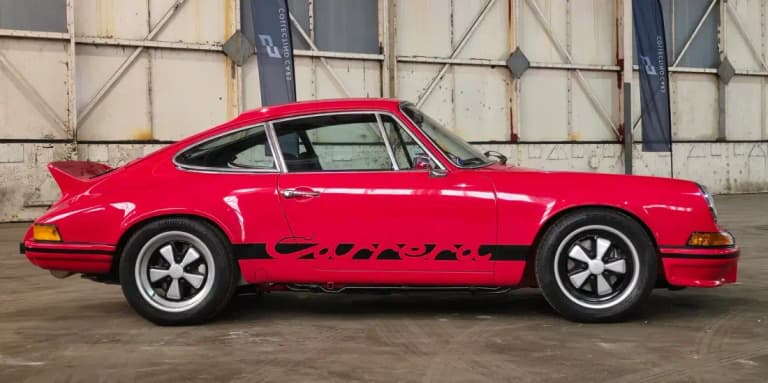
Guards Red is the most famous of all. It first appeared on the 930 Turbo in 1975 and became the defining 911 color of the 1980s. It is bold without being loud, and it suits the car’s lines perfectly. The name nods to the red uniforms of British royal guards.
You will see Guards Red on everything from a base Carrera to a 930 Turbo. It is the shade most people picture when they imagine a vintage 911, and it remains a safe, timeless choice on the used market.
Irish Green, Grand Prix White, and the Period Palette
Irish Green is the signature classic Porsche green, so tied to the brand that Porsche painted the one millionth 911 in it in 2017. It is deep and traditional, the kind of green that looks expensive without shouting.
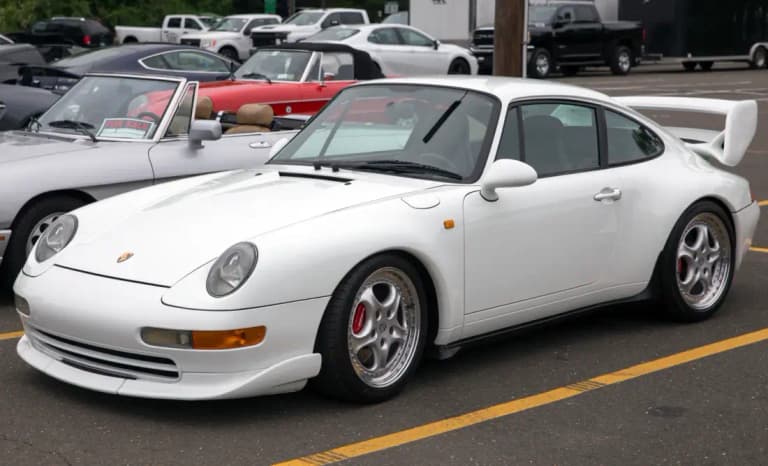
Grand Prix White, Bahama Yellow, and Minerva Blue round out the period palette. These were honest, flat colors that let the shape speak. Grand Prix White in particular became the default racing color and still looks crisp on a stripped-out RS.
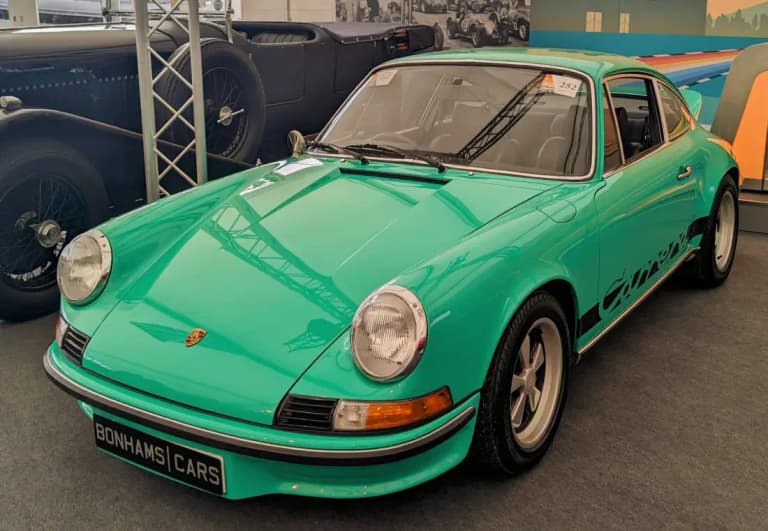
Green stayed part of the story too. Shades like Jade Green gave the early cars a cool, understated look that has come back into fashion with collectors. A muted green on an early 911 reads as tasteful and rare rather than flashy.
The 964 and 993 Era
The last air-cooled cars, the 964 and the 993, brought brighter, more saturated colors. This is the era that gave 911 fans some of their most loved shades.
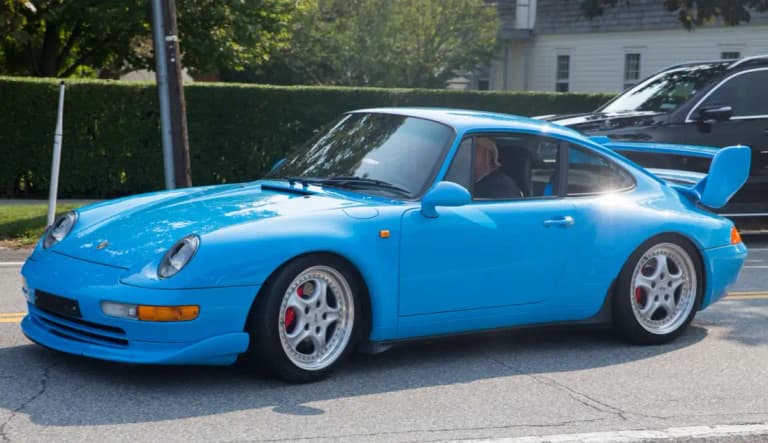
Riviera Blue is the standout. A vivid, almost electric blue, it looks spectacular on a 993 and is now one of the most requested Paint to Sample colors on modern cars. It was the color that proved a 911 could wear something loud and still look right.
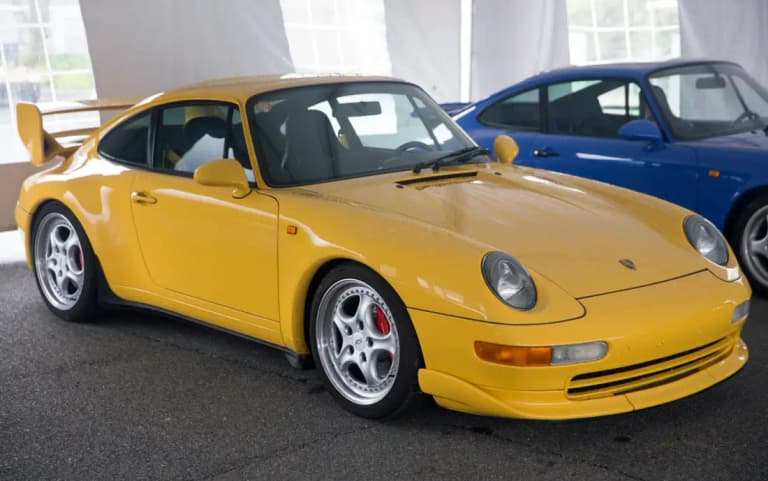
Speed Yellow brought the same energy in a different key, a sharp racing yellow that pops against the car’s curves. It became a signature on the 993 and remains a popular Paint to Sample request decades later.
Reds got richer too, with shades like Rubystone Red and Arena Red. These colors marked the moment the 911 palette moved from understated to expressive, and many of them have since been revived for new cars. Rubystone Red in particular has become a holy grail shade for collectors, who pay strong money for an original car wearing it.
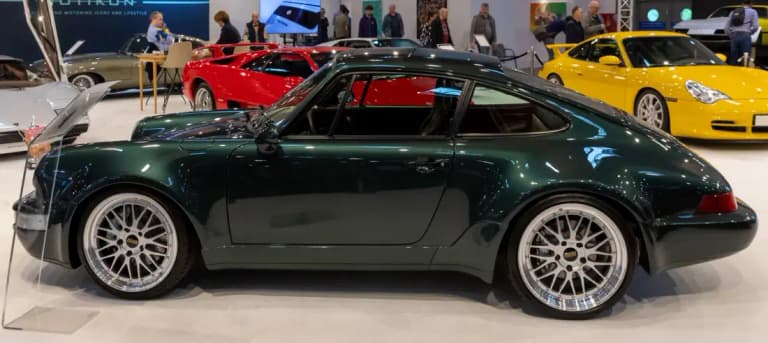
Deep greens belong to this era as well. A 964 in Forest Green or a similar dark tone shows how period the air-cooled cars can look in the right shade. Against polished classic wheels, a deep green reads as understated and expensive, the opposite of the bright RS colors but just as desirable today.
Modern Porsche 911 Colors
The water-cooled 911 generations leaned into bold, high-impact colors, especially on the GT cars. These are the shades that fill social feeds today.
Shark Blue and the Modern Blues
Miami Blue and Shark Blue are the modern signature blues, bright and confident on a GT3 or a Carrera. Shark Blue arrived as a vivid, slightly cooler blue and quickly became the color enthusiasts most associate with the current cars.
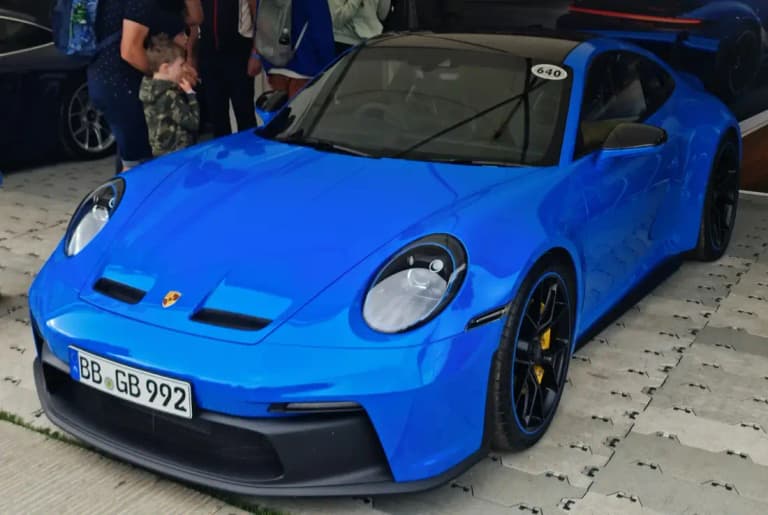
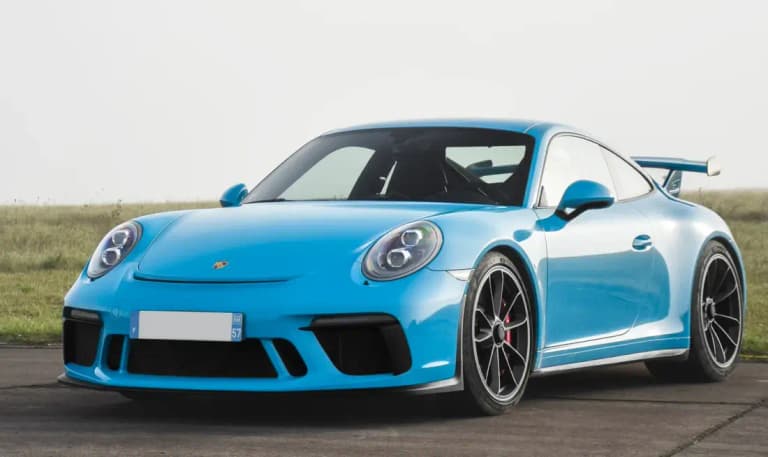
These blues work because they suit the aggressive aero of a GT car without looking cartoonish. On a 991 GT3, a bright blue turns an already serious car into a head turner. The earlier 991 generation set the tone for this look.
Python Green and the Greens Return
Python Green and Lizard Green revived the brand’s love of green for a new audience. Python Green in particular became a Paint to Sample favorite, a deep, glossy green that looks both retro and modern at once.
Softer tones like Chalk, a pale gray-green, became a quiet favorite among enthusiasts who wanted something different from the usual silver. Chalk reads as understated in photos and surprisingly distinctive in person, which is exactly why so many GT buyers chose it.
Black, Silver, and the Neutral Choices
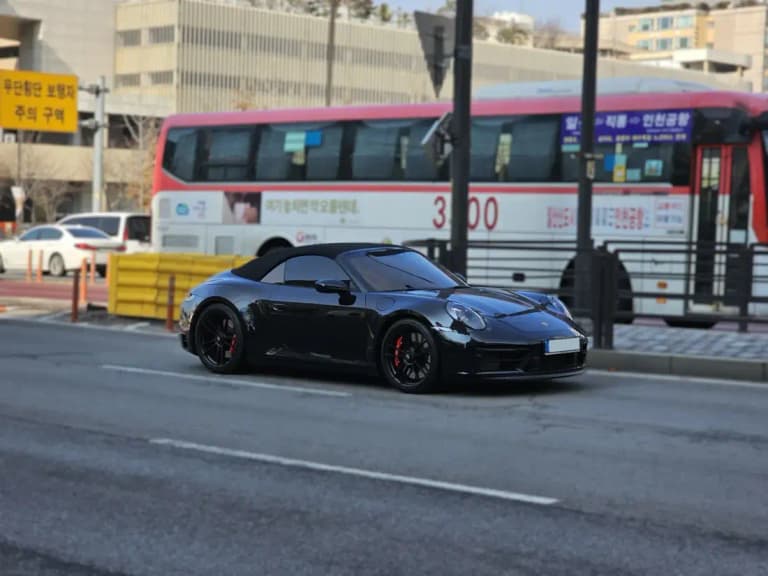
Not every 911 wears a signature color, and that is fine. Black, silver, and white remain the most ordered shades because they are timeless and easy to live with. A black 911 looks sharp and serious, and it hides design details to let the shape dominate.
Silver is the classic engineering color, the shade Porsche used for its racing cars and the one that ages the slowest. A silver Carrera looks just as right today as it did 20 years ago, which is part of why it holds value so well. It also hides road grime and light swirl marks better than black, which makes it the low maintenance choice for a daily driver.
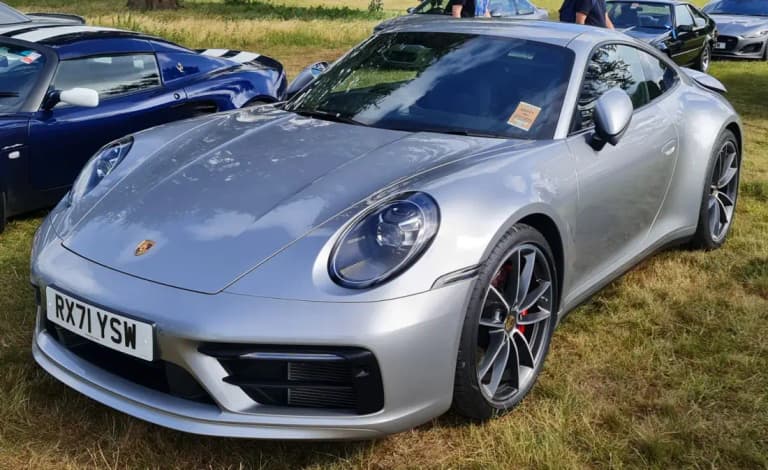
The pattern is clear. Each new 911 generation adds a few bold colors that become instantly associated with it, while the neutral classics stay available for buyers who want something easy and timeless.
Paint to Sample
If the standard palette is not enough, Porsche offers Paint to Sample, or PTS. It is the program that turns the 911 from a car with a color list into a car with almost no limits.
What Paint to Sample Is
Paint to Sample lets you order almost any color, including shades pulled straight from the company’s history. This is how a buyer today can get a new 911 in Riviera Blue, Rubystone Red, or Mint Green, decades after those colors left the standard list.
At the top end, Paint to Sample Plus lets you supply a physical sample and have Porsche match it. It is the ultimate way to make a 911 one of one. On GT cars a great PTS color can genuinely add to the car’s appeal and its eventual value.
What It Costs
Paint to Sample is a five figure option on most current 911 models, and Paint to Sample Plus costs more again because Porsche has to develop and certify a brand new color match. The exact figure changes by model and market, so confirm it with a dealer when you configure the car.
For many enthusiasts the cost is worth it. A factory color that matches the car’s character, or a revived classic shade, often pays for itself in pride of ownership and, on the right car, in resale. It is the single best way to stand out in a sea of silver and black 911s.
There is a catch worth knowing. A Paint to Sample order usually adds time to the build, because the factory has to slot a custom color into its painting schedule. If you want a specific shade and can wait, the result is a car configured exactly the way you imagined it. If you need the car quickly, a standard special color may be the smarter pick.
Color and Resale Value
Color and money are linked, but not in the simple way people assume. The right answer depends entirely on what kind of 911 you are buying.
The Everyday Used Market
On the everyday used market, white, black, and silver sell the most because they are seen as safe, easy resale choices. A neutral Carrera appeals to the widest pool of buyers, so it tends to sell faster and with less haggling over the color.
That does not mean a bright color is a mistake on a daily car. It just means a loud shade narrows your buyer pool slightly when it is time to sell. If you plan to keep the car for years, that matters far less than how much you enjoy looking at it.
Special and Collectible Cars
On special and collectible 911s, the rules flip. A desirable factory color or a tasteful Paint to Sample shade often adds value, and a rare original color on a classic can command a real premium. Collectors actively hunt for the unusual shades.
Many of the cars in our guide to the most valuable Porsche models wear bold or unusual colors, not safe ones. The lesson is that the right color for the right car can be an asset, not a risk. On a limited GT car, the color is part of the spec, and a great one is genuinely sought after.
How to Choose Your Color
There is no wrong answer, but a few questions make the decision much easier. Start with how long you plan to own the car.
Keeper or Short-Term Car
Are you buying to keep or to flip? A keeper can wear the color you love, because resale is years away and you are the one who has to look at it every day. A short-term car leans toward neutral, where the wider buyer pool protects your money when you sell.
If you are torn, split the difference. A timeless metallic like silver or a tasteful dark blue gives you character without the resale risk of a polarizing shade. You get a car you enjoy and one that still sells easily.
Match the Color to the Model
Does the color suit the model? Bold shades look right on GT and sports cars; subtle tones can suit a daily Carrera. A Shark Blue GT3 looks purposeful, while the same blue on a base Carrera can look like it is trying too hard.
And think about the era. A period color on a classic, like Guards Red on an air-cooled car, almost always looks right. If you are still weighing models and budget, our 911 buyer’s guide covers the rest of the decision.
Frequently Asked Questions
What is the most popular Porsche 911 color?
Guards Red is the most popular and most associated 911 color, voted the favorite by Porsche fans. It debuted on the 930 Turbo in 1975. On the used market, white, black, and silver sell the most by volume because they are safe resale choices.
What is Porsche Paint to Sample?
Paint to Sample (PTS) is Porsche’s custom paint program. For an added cost you can order almost any color, including revived classic shades like Riviera Blue or Rubystone Red, or a color matched to a sample you provide.
Do bright colors hurt a Porsche 911’s resale value?
Not usually on collectible or special models. A desirable factory color or a Paint to Sample shade often adds value on GT and limited cars. On ordinary used Carreras, neutral colors are easier to sell, but a tasteful signature color rarely hurts.
What is the most famous classic Porsche green?
Irish Green is the signature classic Porsche green, so tied to the brand that Porsche chose it for the one millionth 911 in 2017. Other period greens include Jade Green and the modern Python Green from the Paint to Sample range.
Can I get a discontinued Porsche color on a new car?
Often yes, through Paint to Sample. The program regularly brings back legendary shades from Porsche’s history, so a classic color like Riviera Blue can be ordered on a current car for an extra fee.
How much does Porsche Paint to Sample cost?
Paint to Sample is a five figure option on most current 911 models, and Paint to Sample Plus, where you supply your own color, costs more again. The exact figure depends on the model and market, so confirm it with a Porsche dealer when you configure the car.
Images: Guards Red by Calreyn88, CC BY-SA 4.0; Grand Prix White, Riviera Blue, and Speed Yellow by Mr.choppers, CC BY-SA 3.0; Jade Green by Calreyn88, CC BY 4.0; Green 964 by Matti Blume, CC BY-SA 4.0; Shark Blue 992 GT3 and Silver Carrera S by MrWalkr, CC BY-SA 4.0; Blue 991 GT3 by Alexandre Prévot, CC BY-SA 2.0; Black 992 Carrera 4S by Damian B Oh, CC BY-SA 4.0. Via Wikimedia Commons.