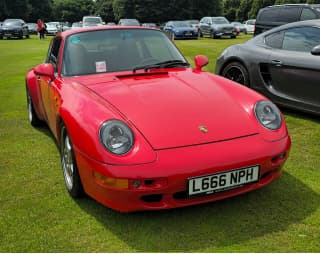
The cayman vs boxster question is really one question: do you want a roof that comes off. The Porsche Cayman and Boxster share a mid-engine platform, the same engines in each generation, and nearly identical handling. The Cayman is the fixed-roof coupe, slightly stiffer and usually a touch cheaper. The Boxster is the convertible roadster built for open-air driving, and the entry point to the wider Porsche convertible range.
In this article, we’ll compare the Porsche Cayman and Boxster to see which mid-engine Porsche fits you best. We’ll cover shared engineering, engines, practicality, and prices.
Contents
- 1 One Platform, Two Body Styles
- 2 Cayman vs Boxster: Performance and Speed
- 3 Cayman and Boxster Engines by Generation
- 4 Daily Driving Practicality: Cayman vs Boxster
- 5 Cayman and Boxster Prices: New and Used
- 6 Cayman GT4 vs Boxster Spyder: Top-Spec Comparison
- 7 Cayman or Boxster: The Buying Decision
- 8 Frequently Asked Questions
One Platform, Two Body Styles
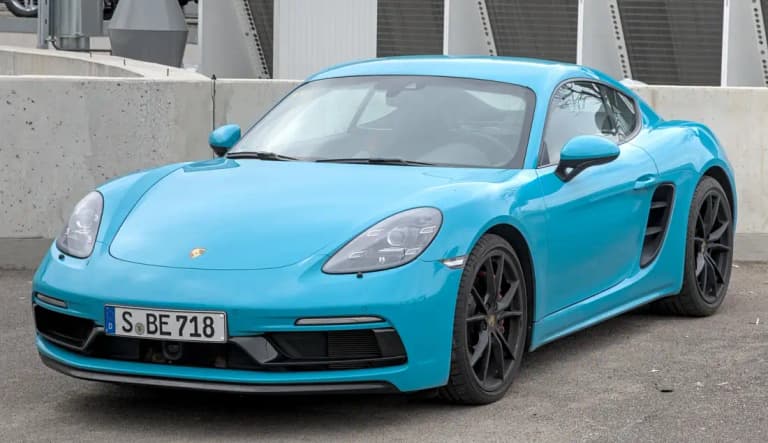
For all practical purposes, yes. Porsche builds the Boxster and Cayman on one mid-engine platform and gives them the same engines in each generation. A 718 Cayman S and a 718 Boxster S use the same 2.5 liter turbocharged flat-four. A GTS 4.0 in either body uses the same 4.0 liter flat-six.
The chassis, suspension, brakes, steering, and the entire interior forward of the rear bulkhead are shared. Because the mid-engine platform is identical, the choice between the two is not really about performance. It is about whether you want a roof that comes off, and that is the whole point of this comparison.
The shared parts list is long. Both cars run the same flat engine mounted ahead of the rear axle, the same six-speed manual or seven-speed PDK gearboxes, and the same brakes and dampers in matching trims. They share wheels, tires, cabins, switchgear, and most body panels from the doors forward.
What differs is small. The Cayman adds a fixed roof and a rear hatch over a covered cargo area. The Boxster swaps that for a folding fabric roof. From behind the wheel the two Porsches feel like the same car with a different lid, which is exactly what they are.
Shopping for the roadster? Our Porsche 718 Boxster guide covers the powered roof, Spyder tops, drains, water checks, and used-car inspection.
Boxster First, Cayman Second: The History
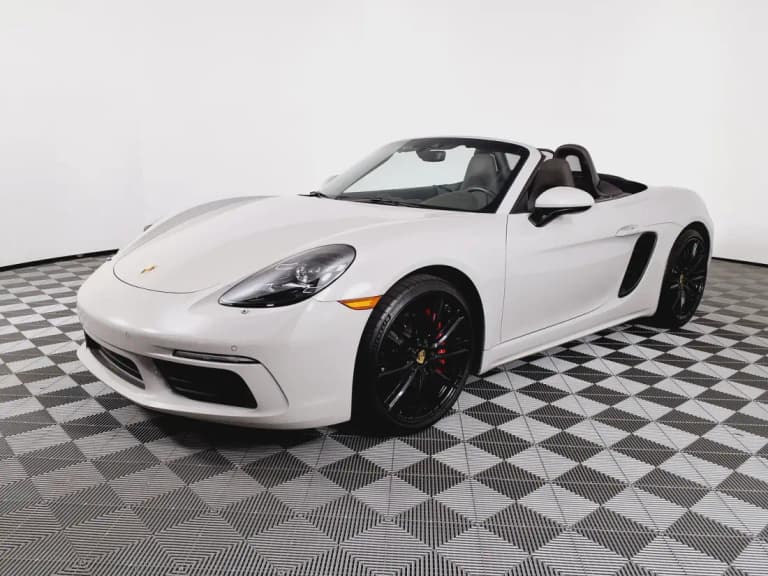
The Boxster came first. It launched in 1996 and gave Porsche a second model to sell during a difficult period, drawing in younger buyers who wanted the Porsche experience without the 911 price. The car sold well and helped steady the company.
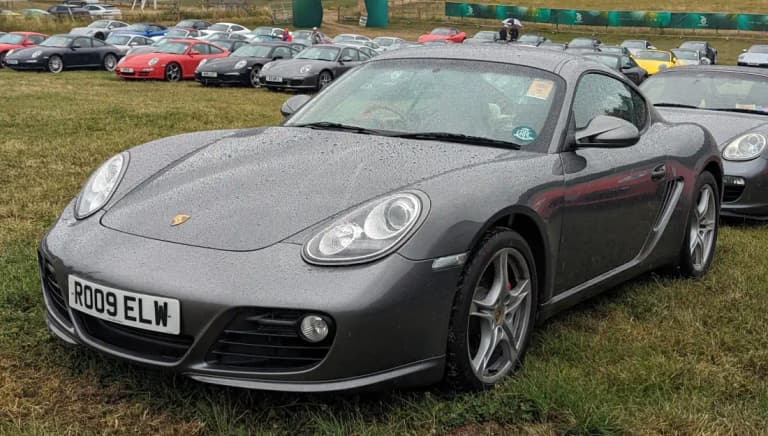
The Cayman arrived in 2005 as the fixed-roof version of the same platform. For years the coupe was treated as the junior model, but enthusiasts came to see the two Porsches as equals that simply offer a different experience. Today neither one is the obvious senior partner.
Cayman vs Boxster: Performance and Speed
In matching trims, neither one is meaningfully faster. The Cayman and Boxster use the same engines and the same gearboxes, so a base car matches a base car and an S matches an S on the spec sheet. Quoted acceleration and top speed figures sit within a tenth or two of each other, which no driver feels on the road.
The Cayman’s fixed roof gives it a small edge in body rigidity, which can translate into a fractionally sharper feel at the absolute limit on a track. That is the only performance difference worth naming, and it is tiny. For a clear sense of how this mid-engine pair stacks up against the rear-engine flagship, see our 718 versus 911 comparison.
Cayman Rigidity Advantage on Track
The Cayman has one genuine technical advantage. A fixed roof makes the body shell stiffer than an open car, and a stiffer shell gives suspension engineers a more consistent base to work from. On a track, at the limit, the coupe feels a fraction more precise through quick direction changes.
In normal driving that difference is very hard to detect. Porsche engineers the Boxster’s structure carefully to limit the flex that affects most convertibles, so it still feels tight and planted on a good road. Both cars deliver the mid-engine balance that makes them sharper in tight corners than the rear-engine 911, and that shared trait matters far more than the small rigidity gap between them.
Cayman vs Boxster: Weight Comparison
Weight is close to a wash. The Boxster carries the folding roof mechanism, while the Cayman carries a fixed roof panel and a rear hatch. Depending on the generation, the two weigh within a few kilograms of each other, so neither has a meaningful straight-line advantage from mass.
That balance is part of why the performance numbers stay so close. With the same power and almost the same weight over the same rear wheels, the cars accelerate and stop in step. The body style does not change the physics in any way a buyer should weigh heavily.
Cayman and Boxster Engines by Generation
Across their history the Cayman and Boxster have used three engine families, and both body styles got each one. The naturally aspirated flat-six defined the early and middle cars, the turbocharged flat-four arrived with the 718 in 2017, and the 4.0 liter flat-six returned in 2020 at the top of the range. In the cayman vs boxster debate, engine choice changes the character of the car far more than the roof does.
Naturally Aspirated Flat-Six Cars
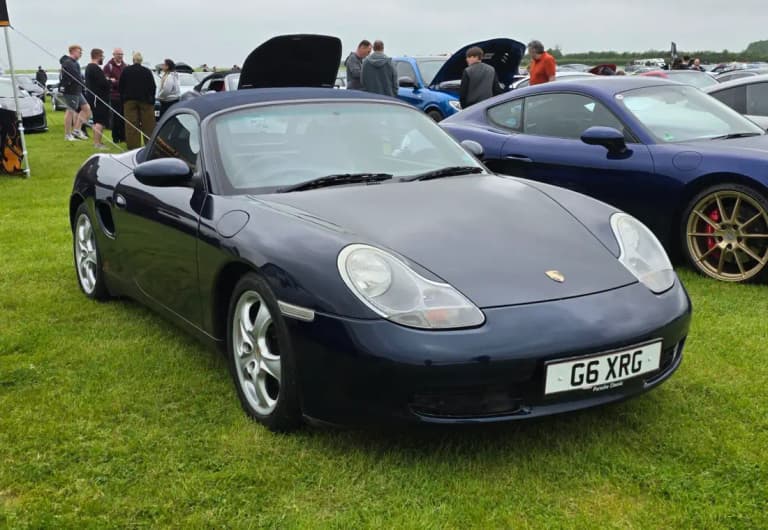
The 986 and 987 Boxster and the 987 Cayman used naturally aspirated flat-six engines from 2.5 to 3.4 liters. The 981 generation that followed sharpened the cars further, with the base car making 265 to 271 horsepower and the Boxster S and Cayman S using a 3.4 liter unit with around 321 horsepower. These engines rev cleanly and sound like a proper sports car.
For many enthusiasts the naturally aspirated six is the sweet spot of the whole range. It delivers linear power, a great noise, and the kind of throttle response that turbocharging softens. If sound and feel sit at the top of your list, the 981 Boxster and Cayman are the cars to shortlist first.
Turbocharged 718 Flat-Four Cars
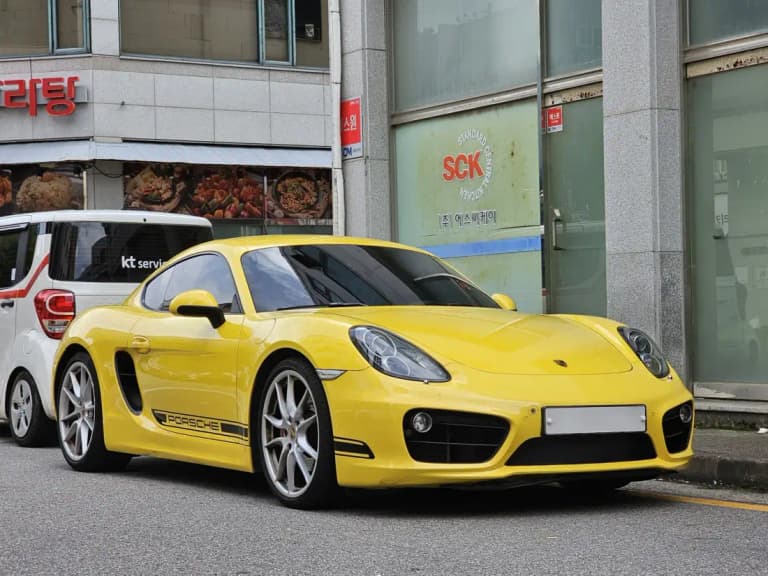
The 718 brought the most controversial change in the model’s history. Porsche replaced the flat-six in the base and S cars with turbocharged flat-fours, a 2.0 liter making 296 horsepower and a 2.5 liter making 345 horsepower. The cars were faster on paper and more efficient, but many buyers missed the sound and the linear delivery of the old six.
The flat-four is a strong daily-driver engine. It pulls hard from low revs, returns better fuel economy, and makes either body feel quick in real traffic. The trade is character: the turbocharged note lacks the top-end sparkle that makes the six-cylinder cars special, and that is the main reason some shoppers skip the base 718 cars entirely.
The 4.0 Liter Flat-Six Returns
Porsche answered the criticism in 2020 by putting a 4.0 liter naturally aspirated flat-six back into the range, first in the GTS 4.0 and then in the GT4 and Spyder cars. The Sport Chrono Package and a six-speed manual were available, and the engine brought the high-revving six-cylinder character back to the top of the lineup.
Production of all combustion 718 Cayman and Boxster models ended in October 2025, which closes the chapter on the naturally aspirated cars. That is part of why the 4.0 liter models are climbing in value, and why the best older sixes are worth seeking out while they remain affordable.
Daily Driving Practicality: Cayman vs Boxster
Both cars are strict two-seaters with a luggage area at each end, so neither is a family car. The Cayman edges ahead on covered storage, while the Boxster gives up a little of that for open-air driving. For a daily car, the gap is smaller than most buyers expect.
Boot Space and Garage Storage
The Cayman’s fixed roof adds a rear hatch over a larger covered cargo area, which makes it the slightly more practical of the two for carrying gear. The Boxster trades some of that covered space for the folding roof, but its front boot is the same size as the Cayman’s. Both will swallow a weekend’s luggage for two.
Garage space is identical, since the two cars share a footprint. If you regularly carry a set of golf clubs or a track-day kit of helmet and tools, the Cayman’s covered rear hatch gives better storage and is the easier car to load. For most owners the difference is minor.
Living With the Roof in Any Weather
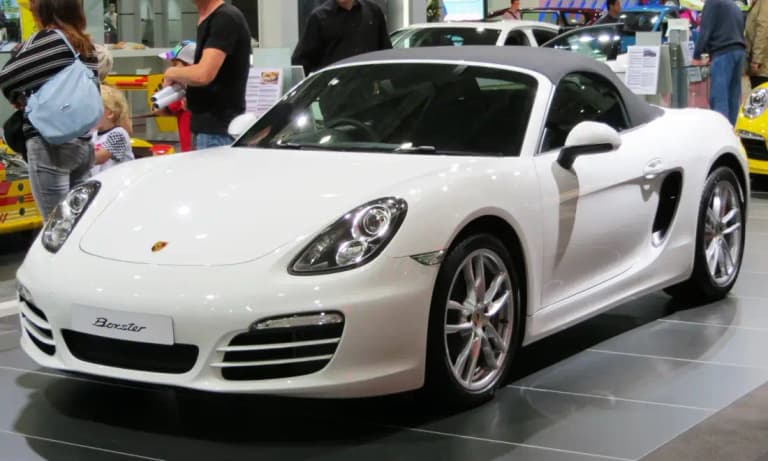
For year-round use in a cool or wet climate, the Cayman’s solid roof is quieter at speed and warmer in winter. It is the better choice as a commuter and the easier car to leave parked outside. Nothing about it asks for special treatment.
For sunny weather and weekend driving, the Boxster’s open-air experience is the entire point. The fabric roof opens in around twelve seconds at low speed, so dropping it at a set of lights is quick and easy. On a warm road with the six-cylinder noise overhead, the convertible makes a strong case for itself.
Interior, Seats, and Cabin Tech
The cabin is shared, so both cars give you the same two seats, the same driving position, and the same dashboard layout in each generation. Early 987 cars feel dated next to a modern rival, while the 981 and 718 cabins are a clear step up with better materials and a proper touchscreen. From the driver’s seat you cannot tell a Cayman from a Boxster.
The one difference sits behind your head. In the Boxster the area over the passenger seat and driver is open to the folding roof, while the Cayman has a fixed roofline and rear glass. That changes the noise and the view, not the ergonomics. Both cars put the major controls exactly where a sports car should.
Cayman and Boxster Prices: New and Used
New, Porsche priced the two very close, with the Boxster usually carrying a small premium for the convertible roof. That pattern does not always hold on the used market, where values now track condition, mileage, engine, and gearbox far more than body style. The good news for buyers is that a clean used example of either car is one of the best-value sports cars you can buy.
Used Prices by Generation
As a rough guide, early 987 cars of either type start around 25,000 US dollars. Naturally aspirated 981 cars with the flat-six sit in the 40,000 to 60,000 dollar range and hold value well. The turbocharged 718 base and S cars span roughly 50,000 to 80,000 dollars, while the flat-six GTS 4.0, GT4, and Spyder models climb well beyond that.
A simple browse on Auto Trader or any Porsche specialist will show Cayman and Boxster pairs of the same generation and engine listed at nearly the same money. The body style rarely moves the price by more than a few thousand dollars, so let spec and history lead the search rather than the roof.
Buying a used Porsche rather than a new car also widens your options enormously. The same budget that buys a new base 718 will buy a clean, lightly used GTS 4.0 with the flat-six, in either body. Always book a proper test drive and a pre-purchase inspection before you commit, because a Porsche specialist can spot the few known weak points fast.
Resale Value: Engine Matters More Than Body
Resale tracks engine and rarity more than coupe versus convertible. The naturally aspirated flat-six cars, especially the 4.0 liter models, hold value best and the limited RS versions sit above their original prices. A turbocharged base car depreciates a little faster, in either body.
Between a matching Cayman and Boxster, neither has a clear resale advantage. A well-kept manual GTS 4.0 will hold strong whether it has a roof or not. Buy the engine and the condition you want, and the body style will not punish you at sale time.
Cayman GT4 vs Boxster Spyder: Top-Spec Comparison
At the top of the range the two cars take slightly different paths. The Cayman gets the GT4 and GT4 RS, the most track-focused versions with fixed rear wings and the sharpest aero. The Boxster gets the Boxster Spyder and Spyder RS, which use the same high-revving 4.0 liter flat-six in an open body. Both are collectible sports cars, and the RS versions in particular trade well above their original prices.
Cayman GT4 and GT4 RS
The Cayman GT4 used a 4.0 liter naturally aspirated flat-six making 414 horsepower with an 8,000 rpm redline, offered with a six-speed manual. It answered every complaint about the turbocharged cars below it and reached 60 mph in about 4.2 seconds. It is the driver’s choice for a road car that doubles as a track tool.
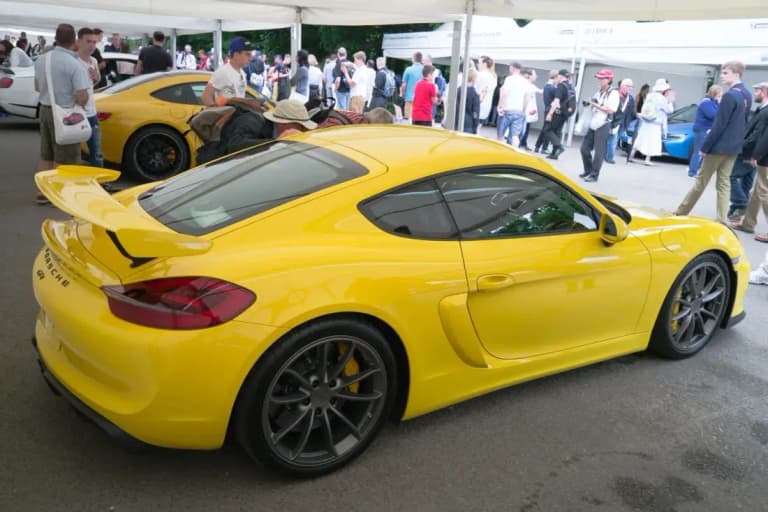
Then came the Cayman GT4 RS in 2022. Porsche dropped in the 4.0 liter flat-six from the 911 GT3, raised output to 493 horsepower, lifted the redline to 9,000 rpm, and fitted a fixed swan-neck wing. With PDK as the only gearbox it hit 60 mph in 3.2 seconds and lapped the Nürburgring in 7 minutes and 9 seconds, with the intakes beside your ears for an extraordinary cabin sound.

Boxster Spyder and Spyder RS
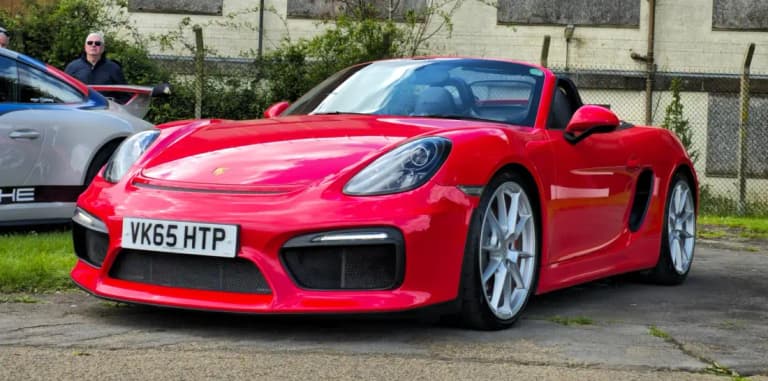
The Boxster Spyder uses the same 4.0 liter flat-six with the roof down, trading the GT4’s fixed wing for a cleaner, lighter open body and a manual gearbox. It is built for drivers who want the noise and the sky over outright lap times, and it remains one of the purest cars Porsche has made.
The 718 Spyder RS takes that further by fitting the 493 horsepower 9,000 rpm GT3 engine in an open car, with a lightweight roof you assemble by hand. The result is a Spyder RS that drinks in the full flat-six wail with nothing over your head. It is the open-air answer to the GT4 RS, and both versions sit at the top of the collector market.
Cayman or Boxster: The Buying Decision
Start with the roof, because that is the real decision. If you want open-air driving, buy the Boxster and do not feel you are giving up anything meaningful in capability. If you prefer a coupe, want the last word in rigidity for track days, or simply like the closed shape, buy the Cayman and enjoy the small price saving on the same great car.
Beyond the body, the priorities are the same for both Porsches. Favor the naturally aspirated flat-six cars for sound and feel, look for a PDK or a clean manual depending on your taste, and buy on service history above all. Whichever roof you choose, you are getting one of the best-balanced sports cars Porsche has ever built, and the cayman vs boxster choice comes down to nothing more than personal taste.

Frequently Asked Questions
What is the difference between the Cayman and the Boxster?
They share the same mid-engine platform and the same engines in each generation. The Cayman is a fixed-roof coupe and the Boxster is a convertible roadster. The coupe is slightly stiffer, the roadster gives you open-air driving.
Is the Cayman faster than the Boxster?
In matching trims they are effectively identical, because they use the same engines and gearboxes. The Cayman’s fixed roof makes it marginally stiffer on a track, but the gap is tiny and most drivers cannot feel it.
Is the Boxster more expensive than the Cayman?
New, the two were priced very close, with the Boxster usually a little higher for the roof. On the used market they trade in similar ranges, so condition and spec matter more than body style.
Cayman GT4 or Boxster Spyder?
The Cayman GT4 and GT4 RS are more track-focused with fixed aero. The Boxster Spyder and Spyder RS use the same engines in an open body. Both are collectible, and the RS versions trade above their original prices.
Should I buy a Cayman or a Boxster?
Buy the Cayman for track use, rigidity, and a slightly lower price. Buy the Boxster if open-air driving matters to you. Mechanically you are getting the same car, so let the roof decide.
Are the Cayman and Boxster reliable?
Both are dependable when serviced properly. Older flat-six cars carry the concerns of their era, while the turbocharged 718 cars are robust. On any used example, buy on service history over body style.

Images: 718 Cayman GTS by Alexander-93, CC BY-SA 4.0. 718 Boxster S by HJUdall, CC0. 987 Cayman by Calreyn88, CC0. 986 Boxster by Calreyn88, CC BY-SA 4.0. 981 Cayman S by Damian B Oh, CC BY-SA 4.0. 981 Boxster by OSX, public domain. 981 Cayman GT4 by Edvvc, CC BY 2.0. 981 Boxster Spyder by Calreyn88, CC BY-SA 4.0. 718 Cayman GT4 RS by Calreyn88, CC BY-SA 4.0. 718 Boxster Spyder RS by Alexander Migl, CC BY-SA 4.0. 718 Boxster T by Alexander Migl, CC BY-SA 4.0. Via Wikimedia Commons.